
Are Georgia Mugshots Public Records?
Sometimes yes. But a public record and a photo an agency can post are not the same thing. Georgia's Open Records Act covers records kept in public work. That includes photographs and electronic data, unless a separate law carves out an exception. A jail can hold a booking record yet withhold the photo under a different rule. A court file may show a final result that a roster never updates. Each source answers a different question. A search works best when it names the custodian and the record sought.
A booking photo only shows that an agency processed or identified someone. It proves neither the listed charge nor current custody. A missing photo does not mean no booking occurred. Official sources often offer several matching tools. Pair the name with a booking date, county, agency, or booking number before trusting the hit.
Important: A booking photo shows an arrest, not an ending. The court or agency file holds the outcome, so check there before treating the listed charge as the whole story.
Georgia's Two Mugshot Statutes
Georgia's photo rules live in two statutes. The first is O.C.G.A. § 35-1-19. It covers how an arresting agency handles a "booking photograph." That means an image made for identification or during jail processing. With narrow exceptions, the agency or its agent may not post that image on a website. It also may not hand the photo to any outlet it knows charges money for removal. Requesters must sign a statement. Their intended use must follow the law. A false statement can trigger a separate offense under O.C.G.A. § 16-10-20. The current text of § 35-1-19 lists limited exceptions. These include uses required by other laws, the sex-offender registry, and law-enforcement administration. News, commentary, and advertising are permitted. But only from covered newspaper, radio, and television outlets. A private booking page is not an official record of how a case ended.
The second law came through the Georgia Attorney General's overview of booking-photo and removal rules. It spells out duties for agencies and commercial publishers alike. The framework arrived in two steps. In 2013, House Bill 150 amended the Fair Business Practices Act. The change required free removal in defined cases. A year later came House Bill 845. It added the agency-side definition, the posting limits, the ban on supplying fee-removal sites, and the signed-use statement. Later record-restriction and first-offender changes affect what a person can ask an agency or publisher to do.
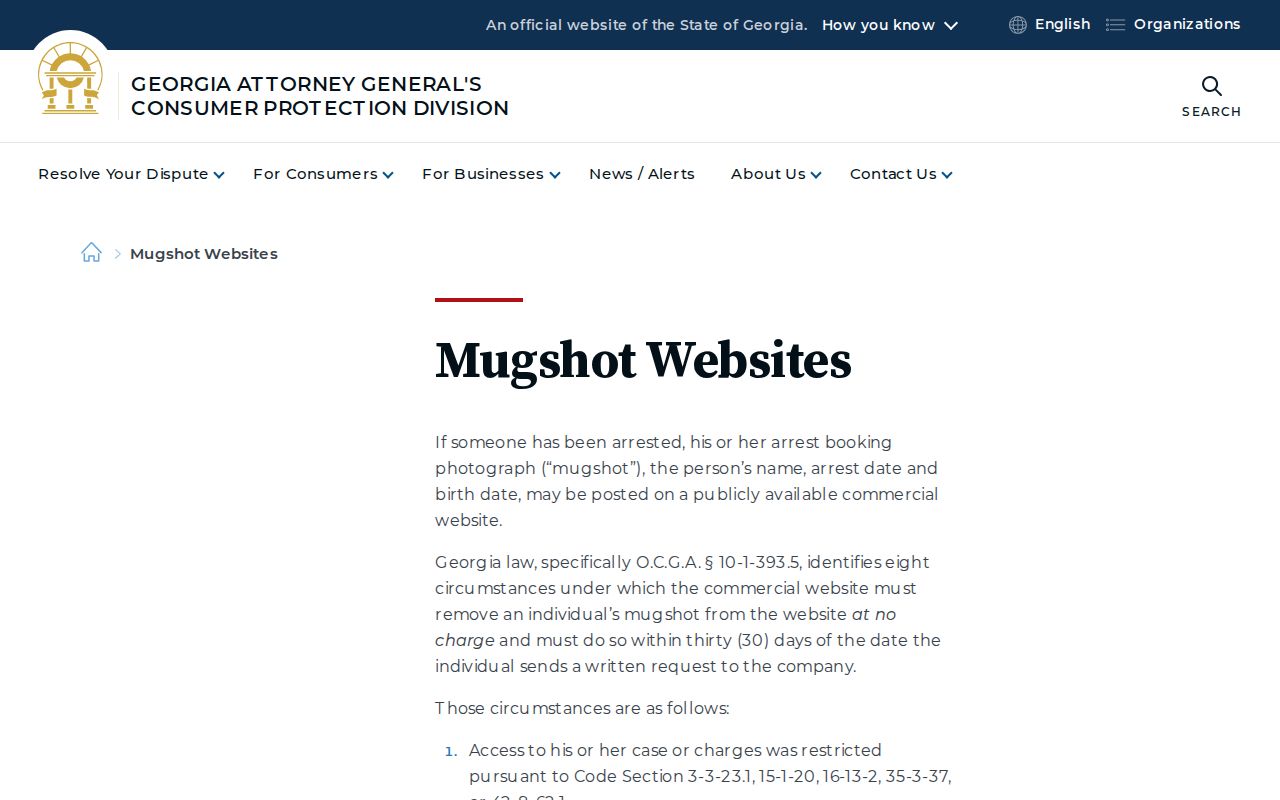
The Attorney General's guidance is state material, not a booking photo. No reported Georgia appellate ruling has struck down either statute on its face. A 2024 federal order involving the Attorney General's authority and remedies was issued under the Fair Business Practices Act. It is not a direct ruling on these laws. The proposed 2025-26 HB 10 did not become law. A bill alone changes nothing. A lawsuit alone changes nothing either.
Note: Check enacted laws and the current code text before treating any proposal or case as a change in Georgia's photo rules.
What Georgia Records Remain Available
The posting ban does not shut down every path. It applies to agency photos, not to booking or case records. Start with the record that answers your question. County sheriff and jail systems may show current custody, recent bookings, or a date range. Fields and image policy vary by county. A records request can reach material beyond any public roster, subject to exemptions. For charges and how a case resolved, court access is the better route. The Georgia statewide arrest and mugshot lookup hub points the way. It leads to the right official source for each record type.
| Question | Best record path | What it can show |
|---|---|---|
| Was someone booked or held? | County sheriff or jail roster, then the records custodian | Custody status, booking date, booking number, charges as entered, and sometimes a release or bond field |
| What happened in court? | Georgia Courts E-Access or the county clerk | Case events and the disposition available in that court system |
| Is someone serving a state sentence? | GDC offender search | A prison-system profile and a photo when GDC has one; this is not a county booking feed |
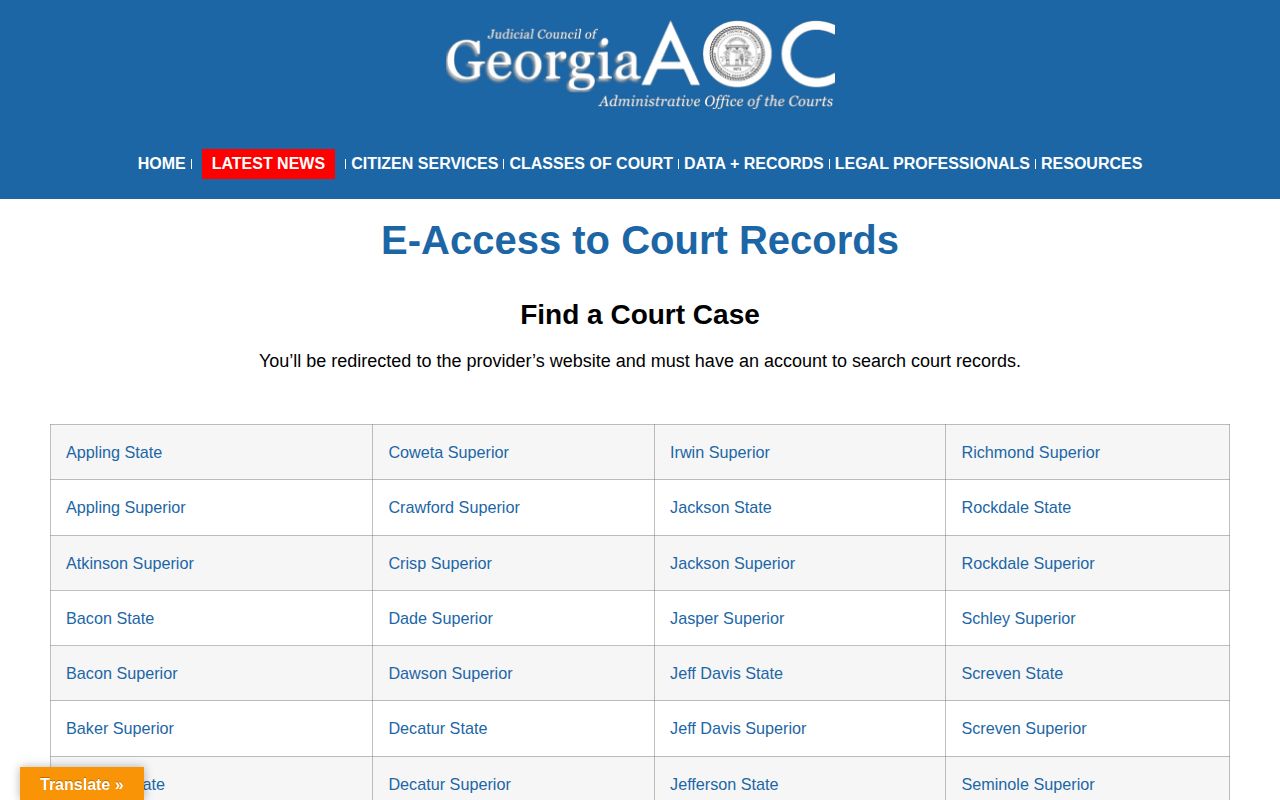
Georgia Courts routes E-Access users to a provider and requires an account before any search. Coverage and public access differ by court, so one free statewide database is not the reality. The Georgia Courts E-Access page lays out that route.
State prison adds another layer: the Georgia Department of Corrections (GDC) search. A profile there may show an offender photo when one exists. It does not replace a county jail roster. If a name-only search seems unclear, add an identifier. Try the county, booking date, or GDC ID. Do that before assuming two entries name the same person.
Why Georgia Booking Photos Go Missing
Georgia keeps no statewide booking-photo roster. Each of its 159 counties decides for itself how, or whether, to post mugshots. The formats vary widely. Some counties run current-inmate pages, recent-admit searches, or date-range catalogs. Others publish downloadable datasets or vendor portals. You will also find text-only rosters, withdrawn sites, and counties with no documented public interface at all. Photo access ignores county size, too. Banks and Tift show booking photos, while Cobb, Bibb, Chatham, Gwinnett, and Fulton list no public image field. None of this is fixed. Local agencies can change vendors, fields, or display settings whenever they choose.
The Open Records Act does not fix this. Its definition covers records, photographs, and computer information kept in the course of public business, yet exemptions still apply. Exemptions exist. Under § 50-18-72(a)(4), pending law-enforcement and prosecution records may be exempt, initial arrest and incident reports get different treatment, and the statute cross-references booking-photo limits. The Attorney General's Open Government explanation describes the public-record definition and its exemptions, which is why a request does not guarantee an unredacted file or image.
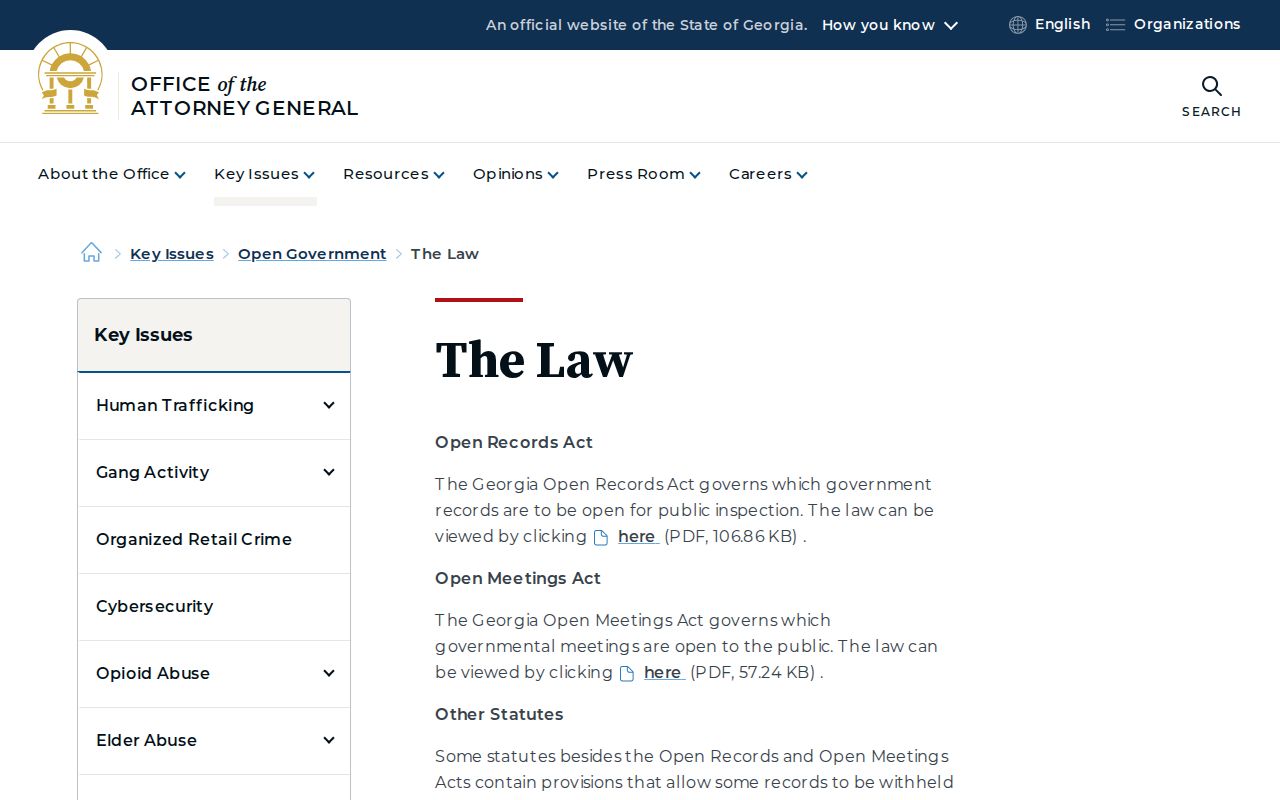
The screenshot shows the state's public-record law and exemption overview. When a source returns no result, use the careful label “not located in the reviewed public source.” Do not infer that a person was never arrested, that a case was dismissed, or that no image exists. Ask the originating agency whether the record is withheld, outside the portal's date range, transferred, or lawfully destroyed. A county's photo display is a local interface choice, not proof of statewide roster coverage.
Note: A missing public image does not show whether an agency still holds a record or lawfully withheld it.
Free Removal, Restriction, and Sealing
Georgia law targets the mugshot-website business directly. O.C.G.A. § 10-1-393.5 applies to commercial websites that publish a Georgia booking photo. Eight listed case outcomes qualify. If one applies, the publisher must remove the photo without charge within 30 days after proper written service. The request should give the person's name, date of birth, arrest date, and arresting agency. Use certified mail with return receipt. Statutory overnight delivery works too. Address it to the publisher's registered agent, principal place of business, or primary residence, and expect a possible request for proof of the qualifying outcome.
| Record outcome | When the statutory route may apply |
|---|---|
| Restriction or closure | The case or charges are restricted under a listed law, or the agency closed the case before charging without referring it for prosecution |
| No timely charge | The limitation period expired before charging, or a referred matter was dismissed before a charging instrument |
| Grand jury action | A grand jury returned two no bills before charging |
| Post-charge resolution | All charges were dismissed or nolle prossed, meaning the prosecutor ended the case, or the person was acquitted of all charges |
| Specified drug case | A listed drug offense ended in a § 16-13-2 sentence and probation was completed successfully |
The Attorney General's removal guide lists the eight qualifying outcomes. Delivery methods and the 30-day window appear there too. It also explains the complaint route when a covered publisher refuses or demands payment. This duty binds a qualifying commercial publisher only. It does not make every image private. Georgia calls its government remedy record restriction, though public instructions may say expungement. Eligibility turns on arrest date and outcome. For arrests before July 1, 2013, a person usually starts with the arresting agency and prosecutor. Later cases commonly go through prosecutor approval at sentencing. Others run through the prosecutor and court record. Restriction limits access by certain non-criminal-justice users. It does not erase every court or private copy automatically. Big changes arrive July 1, 2026. HB 162 adds automatic restriction and sealing at sentencing. It covers qualifying First Offender Act cases entered on or after that date. The law expressly reaches qualifying law-enforcement, jail, and detention arrest history, including fingerprints and photographs. It also sets procedures for certain older eligible first-offender sentences and allows unsealing after revocation. Get the final court disposition first. Then send qualifying proof to each publisher. The signed law and Georgia Courts instructions explain those routes. No remedy erases an independent copy. The RecentlyBooked policy page describes its free process. It covers dismissed, restricted, wrong-person, juvenile, duplicate, or outdated entries.
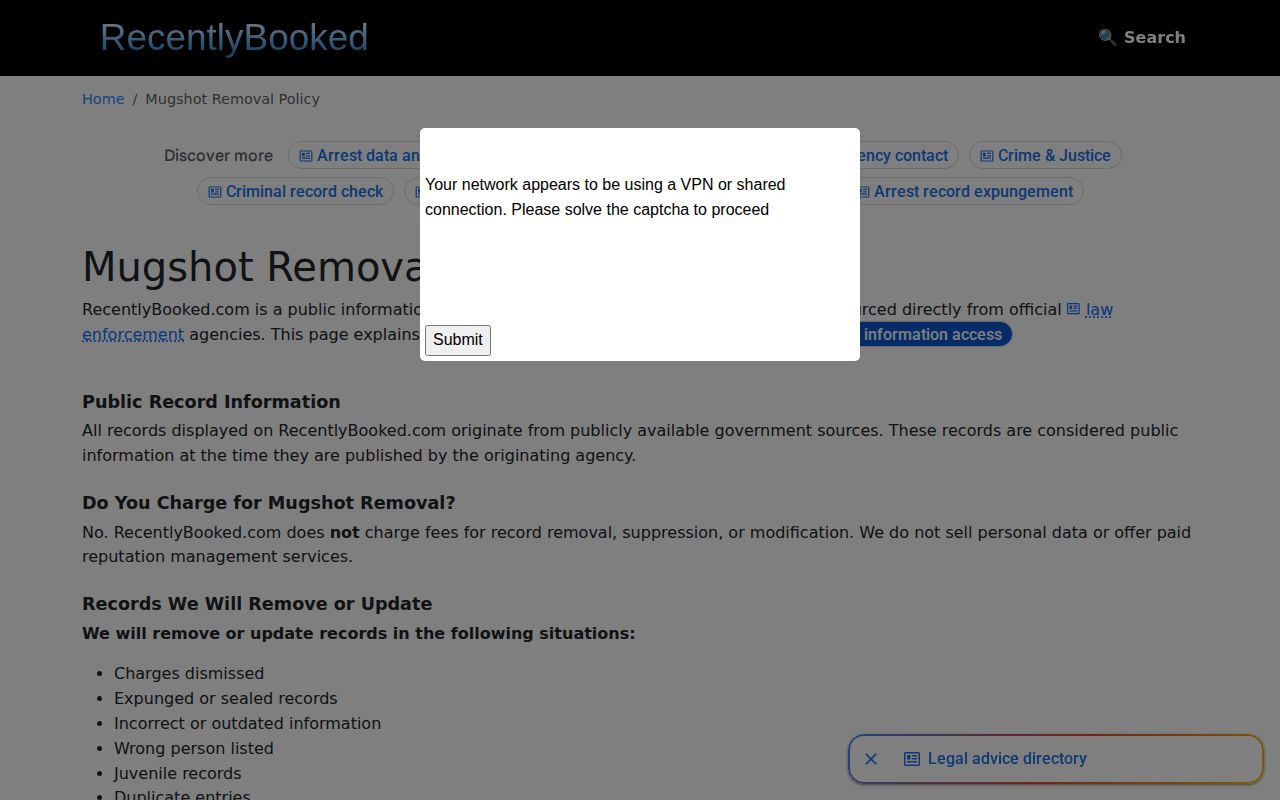
The publisher's stated process stands apart from Georgia's statutory notice and proof rules. The Georgia Gazette also runs a free second-chance review. Its policy does not replace the statute or change an official record. Never pay for guaranteed deletion. No one can purge every copy. Keep the official case record, the publisher URL, delivery proof, and the response together. Use the Attorney General's complaint route if an eligible site misses the statutory window or charges a fee. Restriction can change an official file. Independent publisher or archive copies may still show.
Note: A publisher's voluntary review can correct its own copy, but it cannot control what another site retains.
Juvenile Photos and Private Records
Juvenile files sit behind their own privacy wall. O.C.G.A. § 15-11-702 covers a child's photographs and fingerprints. The conduct at issue would count as a felony for an adult. The law keeps those images separate from adult material. Access is limited to law enforcement and criminal-justice agencies. Certain court or public-interest settings in the statute also qualify. Destruction or removal is available when no delinquency petition gets filed. It also applies when the petition is dismissed, or when the child is not adjudicated delinquent. Photographs taken later face the same limits. A court order or transfer to adult prosecution is the exception. The full text sits in the Georgia juvenile-record statute.
The state agency that holds youth records takes a firm line. The Georgia Department of Juvenile Justice privacy statement speaks plainly. It says the department will not confirm or deny whether a youth is or was in custody. It also refuses to hand current or former juvenile-offender photographs to the public or media. Only a law compels release. So a child's name on some third-party page is worthless for identification. Treat it that way.
Adult files carry privacy limits too. A public copy may arrive with fields blacked out. That can include personal data, victim information, medical details, addresses, or identifiers. When something is withheld, ask the custodian to name the exact exemption. Guessing at a blank field gets you nowhere. A withheld item does not mean the record never existed. A gap in a database proves nothing about how a case ended.
Request a Georgia Booking Record
Put your request in writing. It gives the agency a clear description of what is sought and makes the response easier to track. Send it to the records custodian for the arresting agency or the jail. Ask for each item separately, since a booking sheet, incident report, booking image, bond entry, or disposition may sit with different custodians under different access rules.
- Name the person and provide a county, agency, and approximate arrest or booking date. Add a booking number if known.
- List the exact records sought, such as the booking record, arrest or incident report, booking photo if legally disclosable, bond or release entry, and case disposition.
- Ask for electronic copies when available and request an estimate before work begins if fees may apply.
- If an item is withheld or redacted, ask the custodian to identify the specific exemption. Keep the response and any payment record.
Fees in Georgia are capped by statute, not invented by clerks. The first 15 minutes of search and retrieval time are generally free. Copies can run up to 25 cents per page. Search or redaction labor gets billed at the hourly rate of the lowest-paid qualified employee. Expect a demand for advance payment when the estimate tops $25. Those figures come from the state Open Records Act guide, and they are ceilings rather than a promise that every request costs money.
Timing works the same way. The agency owes an initial response within the window the Act sets. Actual access or delivery can lag when files need review first. The Georgia Attorney General's Open Records request instructions walk through the written-request path and stress sending it to the correct government custodian.
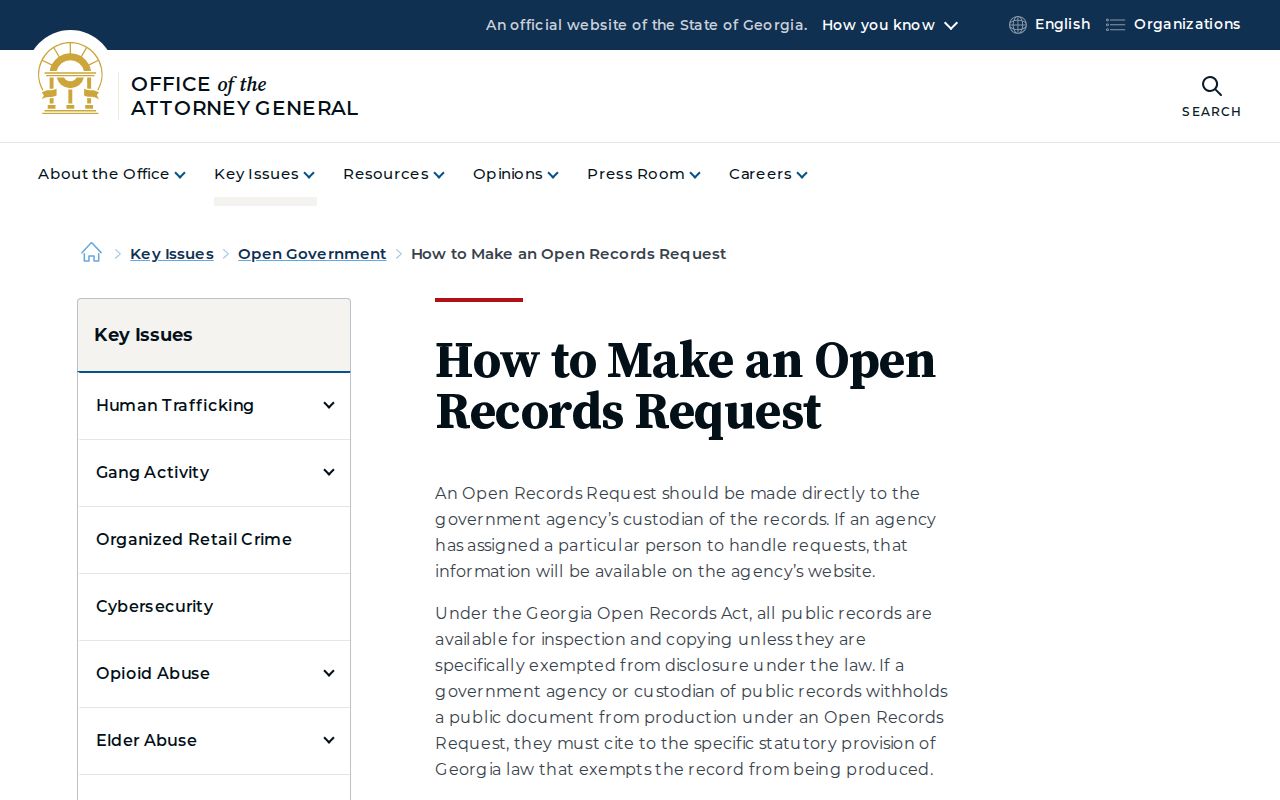
Court outcomes belong to the county court. Search there or ask its clerk. State custody questions go through GDC's offender search or its open-records portal. An arrest file starts with the agency that made it or now holds it. Georgia's public-record rule is broad. But no request can override a specific exception or conjure a record the custodian no longer keeps.
Georgia Record Terms in Plain Words
Each of these labels marks a different step in a case. A photo, a roster entry, and a court result are three separate records, not one.
- Booking
- The jail's intake process after an arrest, which can include identity details, charges as entered, and a photograph.
- Disposition
- The court's recorded outcome, such as dismissal, acquittal, plea, or conviction.
- Record restriction
- A legal limit on access to eligible Georgia criminal-history information by certain users; it does not automatically erase every copy.
- First Offender
- A Georgia sentencing status with specific statutory rules. A qualifying case can have separate sealing and restriction effects.
Georgia public mugshot laws draw boundaries around images. The safe lookup path still starts with the agency that made the record. It ends at the court that resolved the case. A public copy can be old or simply wrong. A restricted official file can coexist with a stale outside version. Match on more than a name, check the disposition, and seek corrections from the custodian who controls that specific file.