
Where Georgia's Old Records Live
Georgia keeps no master vault for old arrest files. Each custodian holds one piece. The sheriff or jail comes first for county booking records. A city police department keeps its own arrest files. The court clerk holds the case file. Prison-system records belong to the Georgia Department of Corrections, or GDC. Some historical material does transfer to the Georgia Archives, though age alone never proves a file landed there.
The best statewide lead is the Central Register of Convicts at the Georgia Archives. That prison-history collection spans 1817 through 1976. An entry can yield a name, file number, county, sentence, and release history. It is not a complete booking-photo collection. Plenty of records sit closer to home in a county office, a court file, a newspaper archive, or a local historical collection that never moved to the state.
For recent or mid-range bookings, start locally. The Georgia County Directory routes you to local sites. The statewide record overview explains how current rosters, court records, and state-prison records differ. Archive work begins once the likely custodian and record type are clear.
Note: The Central Register covers state-prison history, not a complete county booking or photo archive.
Georgia Archive Collection Inventory
Start with a finding aid. It tells you what a collection can answer before you request a box or a scan. These are real research paths, not mugshot guarantees.
| Collection or route | Era and record type | How to use it |
|---|---|---|
| Central Register of Convicts finding aid, Georgia Archives | Bound prison registers, 1817–1976; names, file numbers, crimes, counties, sentences, terms, receipt and release dates, physical descriptions, escape or recapture, detention, and disposition details. | Search the finding aid and ask Archives staff about the relevant register; the collection is described as available through archival channels and microfilm. |
| Georgia Archives research handout | Background on the Central Register’s prison-record fields and structure. | Use it to shape a collection request; it is a guide, not a separate image catalog. |
| Leo Frank clemency file, Digital Library of Georgia | A specific state-held legal and clemency record tied to a 1913 case and later history. | Useful for legal-history research, not evidence that an original booking photo exists. |
| County sheriff, jail, police, clerk, or prosecutor | Local booking, arrest, court, or prosecution records; the date range depends on the custodian and schedule. | Ask whether the record is still held locally, was transferred, or was lawfully destroyed. |
Questions about a collection go to the Archives' Research Help page. Staff work from a specific record or collection. They pull a limited number of boxes. Unlimited distance research and copy service are not offered. A focused request on one record beats a broad sweep for everything tied to a name.
What the Convict Register Holds
The Central Register tracks prison history, not jail bookings statewide. Its bound volumes link a person to a rich set of details. Expect a file number, offense label, county, sentence, and term. Receipt dates and release dates appear too. Physical descriptions, escapes, recaptures, detainers, and disposition notes round out the entries. That is often enough to confirm a stay in the state prison system. It also points to the next record worth seeking.
The finding aid calls the series unrestricted. Microfilm and archival channels both carry it. That access note covers this register only. Another collection may stay closed, undigitized, or beyond name search. Nothing in the description promises a full run of prisoner photographs either. Treat each entry as a lead to a prison record.
The Leo Frank clemency file shows the same pattern in a different form. It preserves clemency and later events, not booking photos. For a photograph, track down the original custodian. A licensed newspaper or museum collection works too. Confirm the image is truly a booking shot before calling it one.
Georgia Booking Record Retention
Every jail record sits on a retention schedule. That schedule tells the office how long to keep each record class and what happens once the period runs out. Georgia has one master plan for local governments. It covers jail files and fugitive records. It is not a mugshot archive, though. Nothing in it promises that a booking photo lasts as long as the booking record tied to it. So ask the custodian straight out: how is the photo classified, and was it kept, transferred, or lawfully destroyed? The local-government retention schedule runs long, and this sample view of the Georgia Archives schedule shows where the jail entries fit.
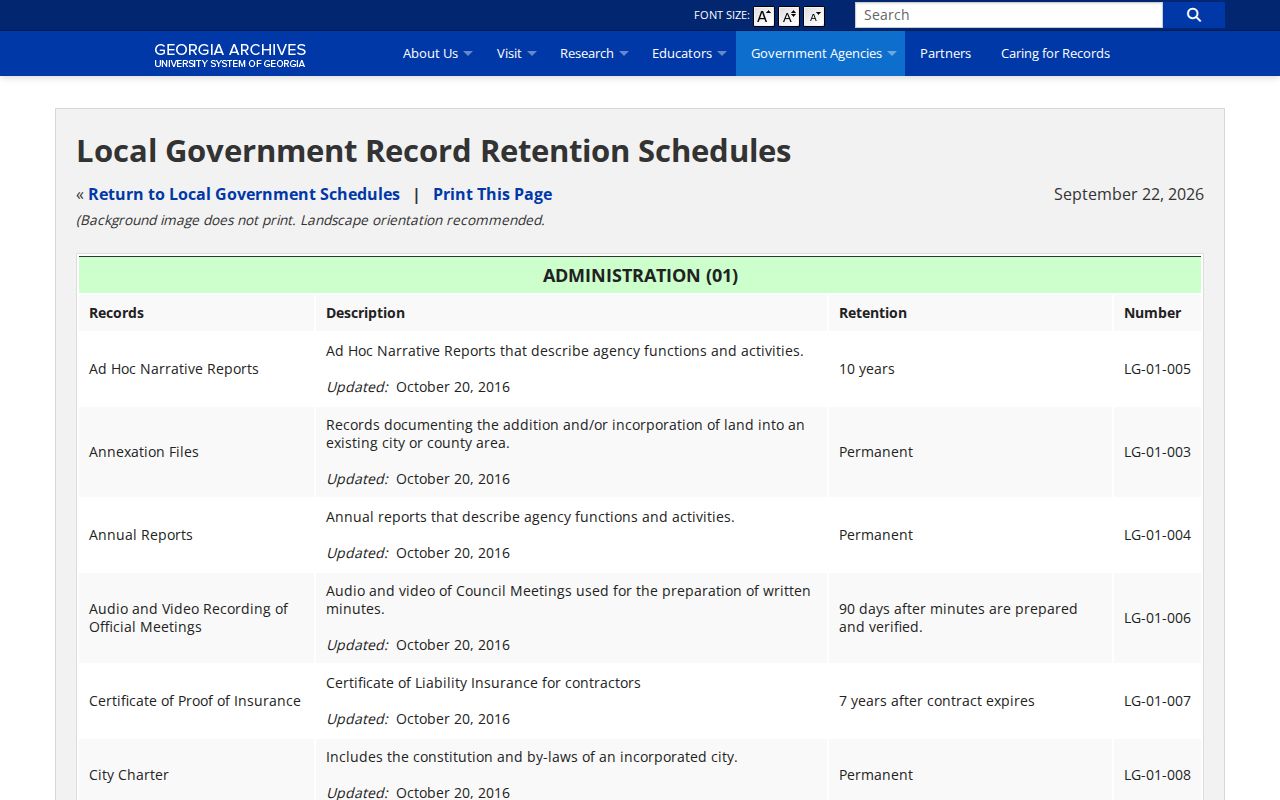
This is a schedule layout, not a person's file. Use the record code and description shown to ask the agency about its own retention decision.
| Schedule entry | Retention stated | What it covers |
|---|---|---|
| LG-19-045 | Five years after apprehension | Fugitive or wanted-person files. |
| LG-19-047 | 180 days | Holding-cell video. |
| LG-19-050 | One year | Incarceration lists. |
| LG-19-054 | Ten years after release | Inmate case files. |
| LG-19-060 | Ten years after release | Jail booking records, including associated booking data. |
| LG-19-061 | Ten years after the last entry | Jail registers. |
| LG-19-095 | Restriction does not change the existing retention period | Expunged or sealed records. |
A listed period is not a guarantee. Records can move before the final day. Some agencies post nothing online at all. The real value of the schedule is that it frames an exact question for the custodian. Which entry did the office apply, and was the record transferred or destroyed under that rule?
Note: A listed period covers the government record category only and does not promise that any separate image survives.
Requesting Archival Records
Go straight to the office that keeps the record you want. That beats any wide hunt for a picture tied to a name. Booking material starts with the county sheriff or jail. Police hold arrest files. The clerk holds court cases. GDC keeps records from the state prisons. When an office no longer has what you asked for, push a little further. Ask whether the record was destroyed under a schedule or moved to a named repository.
- Describe the record. Give the person’s name, county, approximate date or era, arresting agency, and a case, booking, or register number if known. State whether you seek a booking record, court file, prison-register entry, or image.
- Ask the current custodian first. Request confirmation that the office holds the record. If it does not, ask where it was sent or which retention rule governs it.
- Use a focused Archives search. For the Central Register or another state collection, consult the finding aid and contact the Georgia Archives Research Help service with the collection and time range.
- Check access and visit rules. The Archives’ before-you-visit page explains identification, registration, copying, and permission to publish archival images.
- Ask about a copy or image separately. Confirm any fee, format, and rights before ordering. The reviewed research does not establish one fee or turnaround for every local or archival request.
The Georgia Attorney General's Open Records request guidance spells out the written route to a custodian.
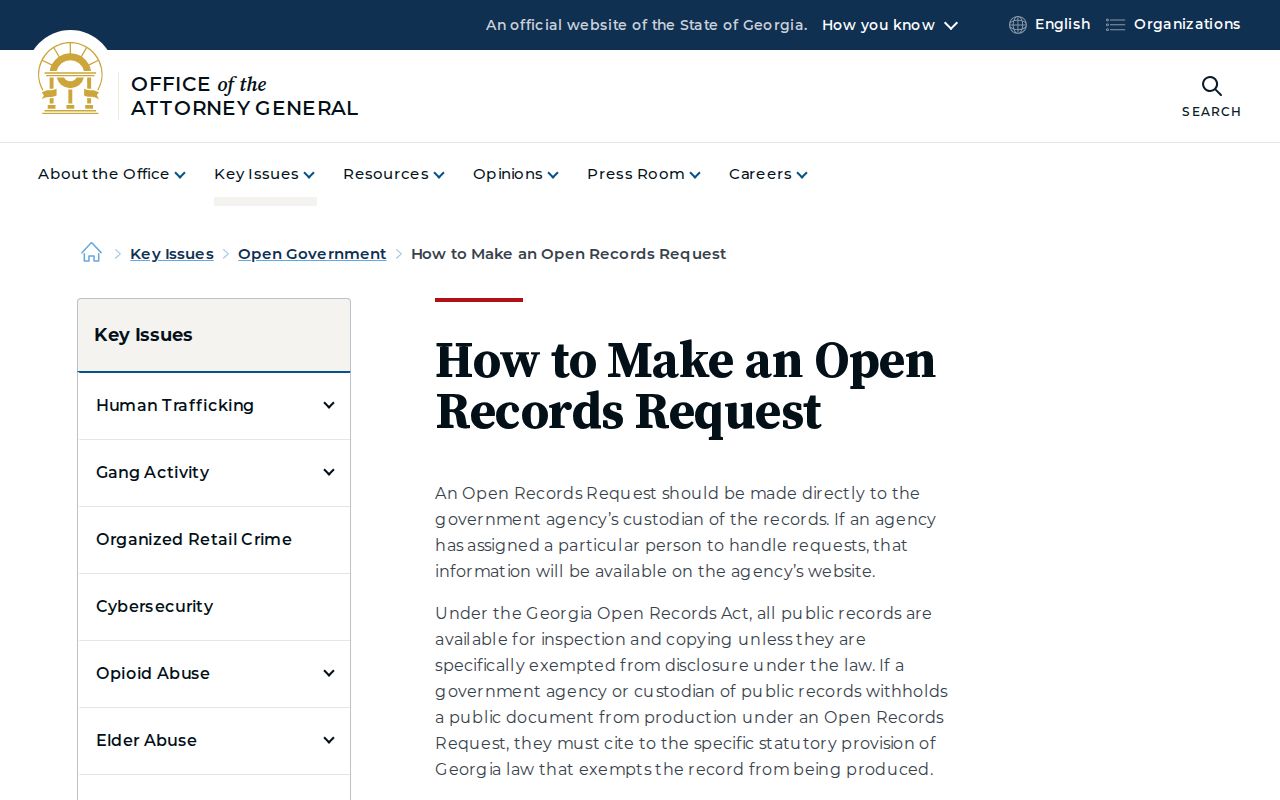
That route covers government records held by agencies. The Georgia Archives runs its own research and copy services, so check with the custodian of the collection before you send anything. Archives staff want a specific record or collection named. They will pull a limited number of boxes, nothing more. Unlimited distance research is not on offer. A tight request, naming a series and a narrow span of years, stands a better chance of reaching the right shelf than a plea for all old mugshots. When a finding aid says nothing about a photo, ask directly. Some agencies kept separate photo files.
Georgia Recent Records and Archives
Keep the record types straight. A current county roster, a sheriff's booking record, a court docket, and an old state prison register are all different animals. Someone drops off a roster after release, yet the booking record can live on under its retention schedule. The court file may hold a later disposition. The Central Register covers prison sentences from its own era, but it cannot stand in for a local booking record or a live docket. Recent arrests? Start with the local jail or the arresting agency. Then check the clerk for filed charges and outcomes. Old state-prison history belongs in the Archives finding aid. If an agency says a record was transferred, get the repository name and series. If it was destroyed, ask which retention rule applied. Fulton County's daily bookings dataset shows one dated local set that stays searchable past the live-roster window.
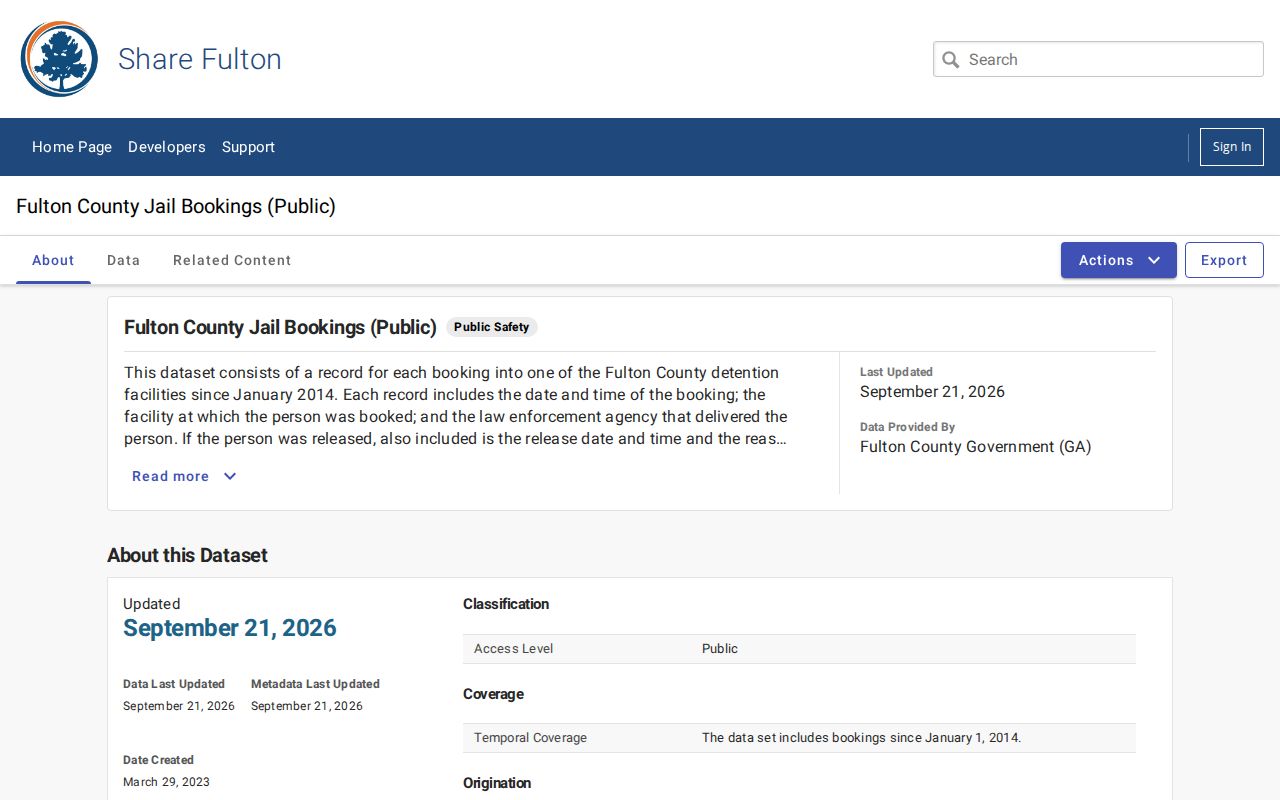
The dataset starts in 2014. It carries no mugshot field, and it is an official record source, not proof that older county bookings still have a surviving image.
What may survive? A register entry, a court file, a newspaper clipping, or an archival image can outlast a web roster. The booking photo itself is another matter. Georgia's schedule sets periods for booking records and related files. It never promises that each photo was kept or transferred.
Retention and publication are not the same. A county can keep a record and never post it. A publisher may hold a copy long after the government page dies. The flip side happens too. A schedule can permit destruction even when someone swears they saw an old page. Ask the custodian. A blank search result is not proof no record ever existed.
Georgia Booking Photos and Records
A booking photo is an image made during law-enforcement identification or jail processing. A historical record can describe someone without holding one. For the Central Register, the description covers physical details and prison events, not a full photograph set. For an old county booking, ask the sheriff or jail three things. Was a photo created? How was it classified? Does it still sit with the booking file? With a known court case, treat the clerk's docket as its own source for the charge and disposition. A docket can narrow the date and record number. It cannot prove the jail still has a photo. The Archives adds a caution of its own: check publication permission before reproducing archival images. Access and reuse are separate decisions. Georgia Courts' E-Access directory points to court record providers that may help pin down a case and its recorded outcome.
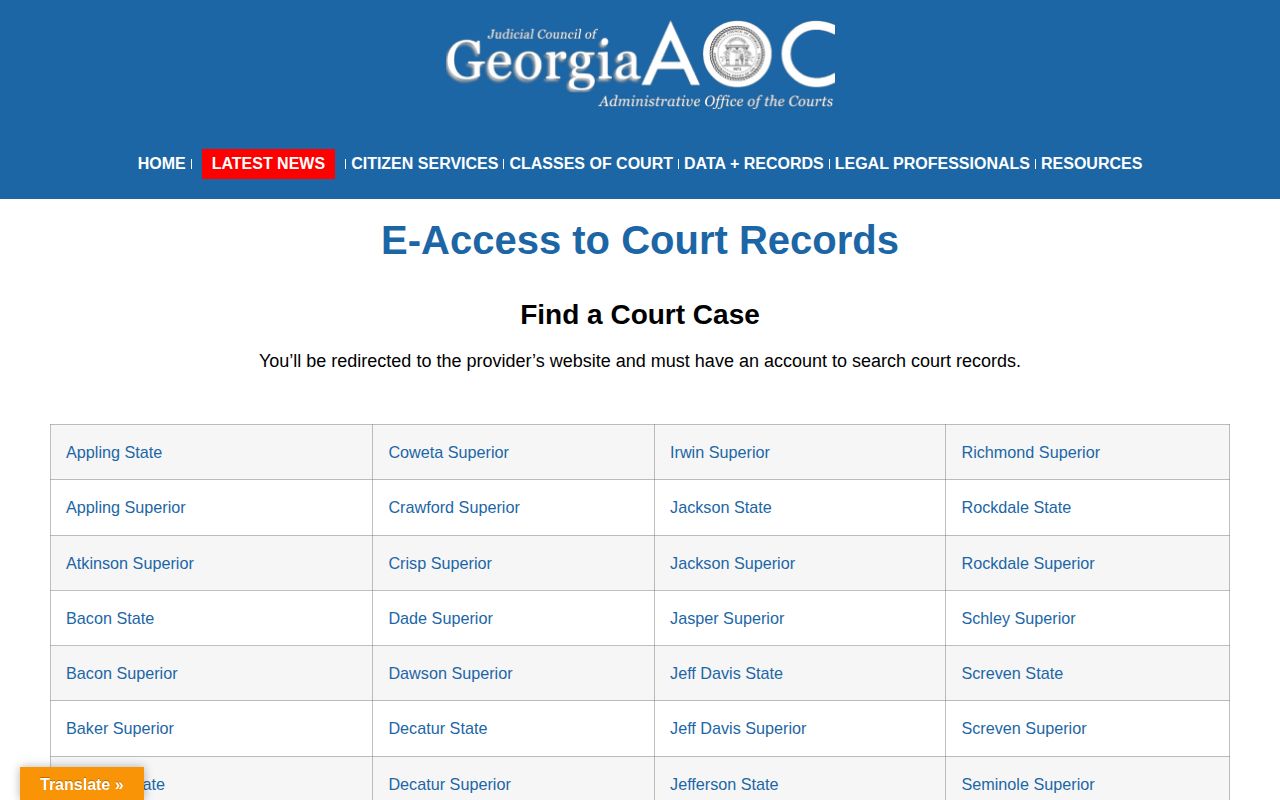
Provider coverage varies, and no docket doubles as a booking-photo archive. The court record gives case context. The sheriff or jail stays the first stop for a booking image. Georgia's record trail works best when each source is labeled for what it holds. The sheriff covers intake, the clerk covers case events. GDC covers state-prison history, and the Archives covers transferred collections. The habit keeps labels straight, so a prison register never passes as an arrest photo. An old image never poses as a current booking. Note: A missing archive image means only that the collection description does not document one.