
Georgia Historic Mugshots in Context
A booking photo can travel far and wide. The court file that explains the case rarely gets the same audience. Georgia's notable arrest records show why the two must stay separate. One marks an agency event. The docket or an official release settles what happened later. News coverage can point you toward a record. It cannot stand in for the court's final word.
Every case listed here rests on documented arrests, proceedings, or archival records. These are not rankings. The examples prove no pattern about people who get busted. Among them, some entries ended in conviction, one major prosecution was dismissed, group cases produced different outcomes for different people, and one Atlanta shooting ended before any arrest or trial. No booking image is reproduced. When a historical photo may survive, the trail leads to its custodian, not to the picture itself.
Important: Match the person, agency, and case before trusting any summary. The official court file holds the final answer.
Notable Georgia Cases and Outcomes
The event that drew attention comes first. The later status, backed by cited reporting or the official record, comes second. Think of "where it lives" as a starting point. Not every booking image is still available.
| Case and year | Agency or event | Documented outcome | Record path |
|---|---|---|---|
| Donald Trump, 2023 | Fulton County booking | Booked and charged; the Georgia election-interference case was dismissed in 2025 | GPB disposition report and Fulton County booking records |
| Brian Nichols, 2005 | Fulton County courthouse escape and later custody | Convicted on all 54 counts in 2008; received life sentences | U.S. Attorney's case release and Fulton court file |
| Wayne Williams, 1981 | Atlanta investigation and arrest | Convicted of two murders in 1982; the convictions were upheld in 1998 | FBI case files and Georgia court history |
| Travis and Gregory McMichael, William “Roddie” Bryan, 2020 | Glynn County booking | Separate Georgia state convictions and later federal hate-crime and attempted-kidnapping convictions | U.S. Justice Department case summary |
| Atlanta Public Schools educators, 2013-2015 | Fulton County booking after indictments | Individual results varied; the jury convicted all but one of the dozen former educators who went to trial | AJC trial report and Fulton court files |
| Leo Frank, 1913 | Atlanta arrest and trial | Conviction; a 1986 posthumous pardon did not declare factual innocence | Georgia Archives clemency file |
| Mark Barton, 1999 | Atlanta day-trading office shootings | No Georgia arrest or trial; Barton died by suicide | Contemporaneous reporting and Atlanta agency records |
Trump's Fulton Booking and Dismissal
Donald Trump surrendered at the Fulton County Jail on August 24, 2023. It was a booking on the election-interference indictment. The Associated Press report from that day covers the booking, the bond, and the charges. The original photo stays with the sheriff's jail records. The docket belongs to the Fulton County Superior Court clerk.
The story did not end there. In November 2025, a judge dismissed the case in full. The GPB report on the dismissal says the successor prosecutor declined to pursue it. The short, accurate status reads "booked and charged in 2023; case dismissed in 2025." The report covers the later status. The jail entry covers the booking only. Two records, two jobs.
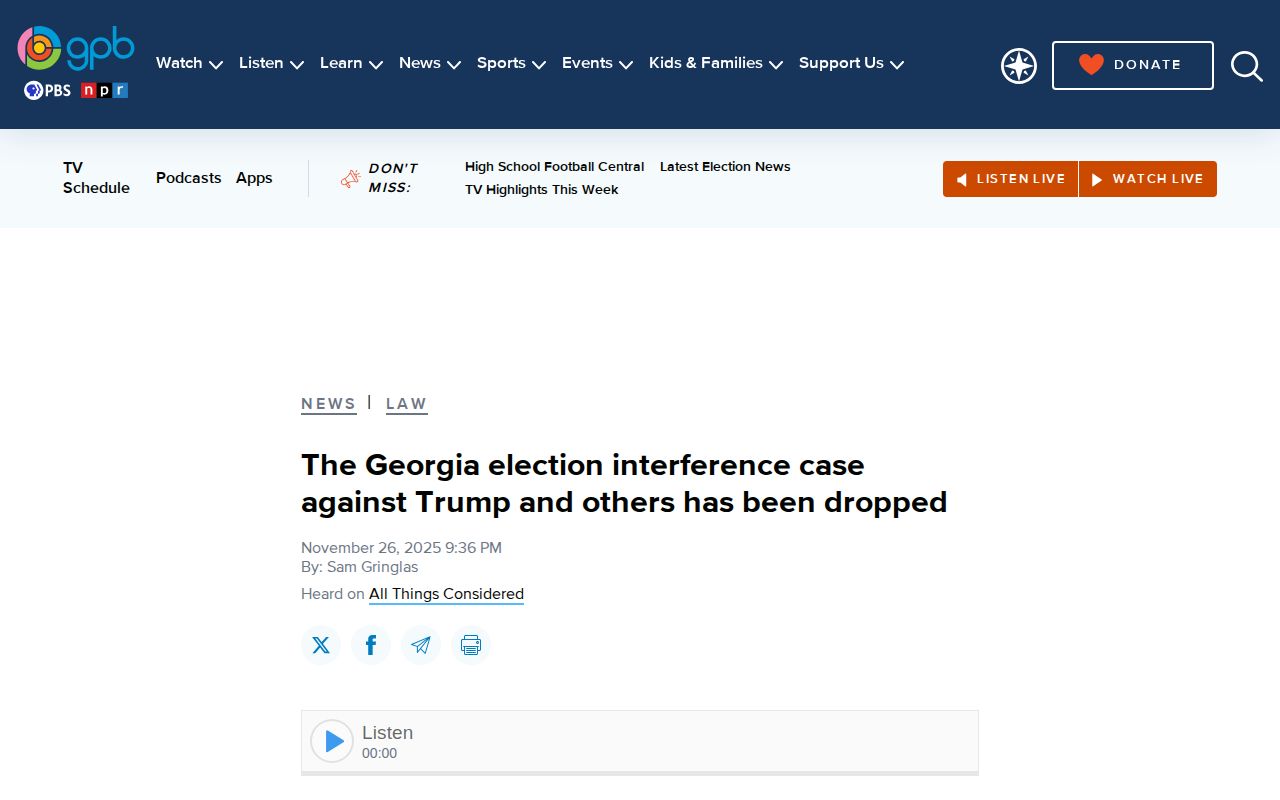
The lookup sequence here is simple. Confirm the jail entry with the booking custodian first. Then check the clerk's docket for what the case became. A summary should always pair the disposition with the arrest. Note: A famous image can outlive the case behind it, so confirm the court result before repeating the original booking label.
Georgia Cases: Nichols and Williams
Brian Nichols was in custody. A rape trial was pending. On March 11, 2005, he escaped the Fulton County courthouse. The federal prosecutor's 2009 case release fills in the rest. A Fulton jury convicted him in November 2008 on all 54 counts. The sentencing jury never reached a unanimous death verdict. Nichols received life sentences. The sheriff and jail hold the booking and custody history. The controlling result lives in the Superior Court record.
Wayne Williams was arrested in Atlanta in 1981. The case grew out of the Atlanta child murders investigation. The FBI file says he was charged in the murders of Jimmy Ray Payne and Nathaniel Cater. A 1982 trial ended in convictions on both counts. The Georgia Attorney General's 1998 release says the convictions stood. That record backs two murder convictions. It does not support claims that Williams was convicted of every child-murder case investigators examined.
For both cases, trust a court source for the outcome. Treat any old photograph as a separate historical record. Request a preserved booking image from Atlanta Police or Fulton County archives. Do not copy an unverified repost. Let the FBI and Attorney General material guide you to the case documents.
Georgia Cases: Arbery and APS
Ahmaud Arbery was killed in Glynn County in 2020. Travis McMichael, Gregory McMichael, and William "Roddie" Bryan were booked there. A Georgia state court later convicted each man for his part in the killing. Federal convictions followed on hate-crime and attempted-kidnapping counts. Those were separate outcomes in separate courts. The Justice Department's case summary covers the federal verdict, while the state trial and the federal docket each hold their own papers. For booking photos, look to the Glynn County sheriff or jail, not a news gallery.
The Atlanta Public Schools case shows the opposite problem. Dozens of educators faced indictment together. The AJC reported all 35 reported to the Fulton County Jail on booking day. At trial, a jury convicted all but one of the dozen educators who went to trial. Others pleaded or met different outcomes. Read the booking-day report and the trial report alongside the Superior Court records to track each person.
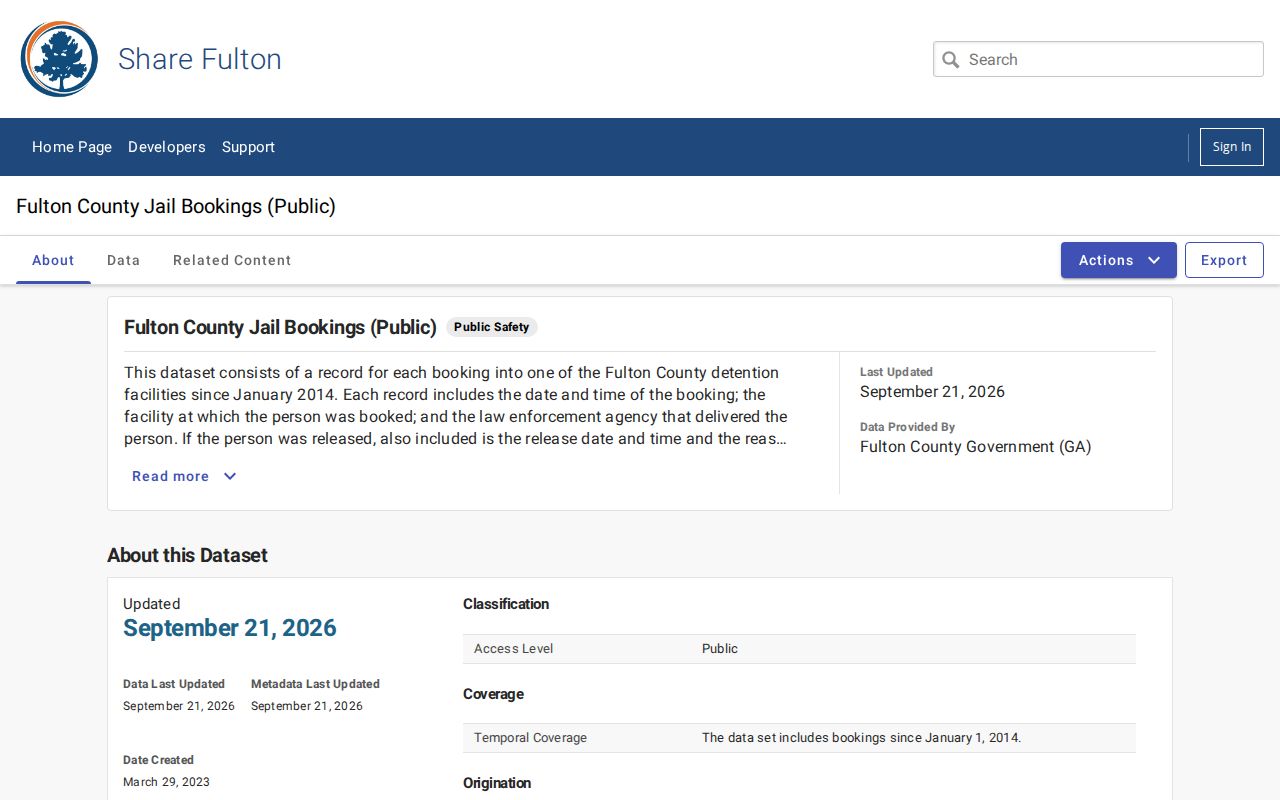
One verdict never answers for a whole group. Match the docket, the charges, and the final result one person at a time. That caution fits any Georgia arrest list that merges people into a single event. Fulton County's public booking dataset offers a working example of a government interface. Its description covers bookings from January 2014 onward. Fields list booking time, facility, agency, and release time. It is not a substitute for the APS docket.
Georgia Archives and Leo Frank
Leo Frank's case began in Atlanta in 1913. He was arrested and tried for the murder of Mary Phagan. The Digital Library of Georgia's clemency file holds papers on his conviction, his appeals, and his later clemency. In 1986 the State Board of Pardons and Paroles granted a posthumous pardon. Keep those facts distinct in any short summary.
Frank's arrest and jail paperwork counts as historical county or court material. Surviving photographs and newspaper scans may sit with the Georgia Archives, the Digital Library of Georgia, or the Atlanta History Center. The Georgia Archives finding aid lists related governor, convict, and fugitive files. No guarantee follows. An identified file may hold nothing viewable online.
The Central Register of Convicts spans 1817 through 1976. Entries can carry names, file numbers, county, sentence, receipt and release dates, physical descriptions, and disposition notes. It documents prison history, not a universal mugshot archive. The Georgia Archives local-government retention schedule sets defined categories for county records. A retention category is not a promise. Old booking photos do not necessarily survive as long as their records. Treat the schedule as a records-management lead, nothing more.
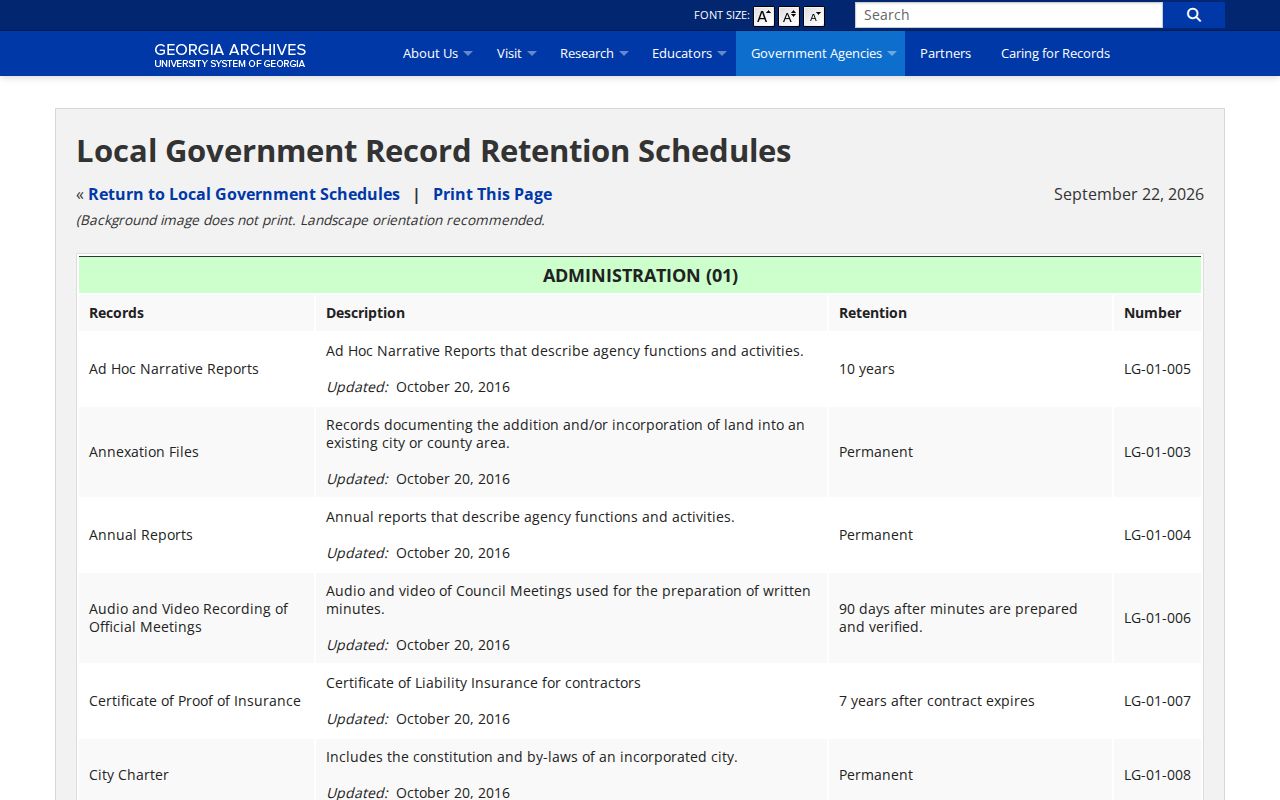
That retention image covers record series, not one photo. Mark Barton marks a different boundary. He was identified as the Atlanta day-trading shooter in 1999. He killed himself before any Georgia arrest or trial. The Washington Post's contemporaneous account describes the rampage and his suicide. The right status is no arrest and no trial, and any investigative file stays with the originating agency, since a suspect photo is not a booking record.
How to Look Up a Georgia Arrest
Famous cases teach the same lookup order. A roster shows a current or recent booking. A booking dataset covers a stated period. The court docket then shows what happened after the arrest. The Georgia mugshot lookup hub explains how county systems differ across the state. Older files may need a request to the local custodian or a search through the Georgia mugshot archives.
- Start with the county sheriff or jail for the booking date, custody status, and any published booking number.
- Use the correct county court or clerk to locate charges, hearings, and the final disposition. State and federal cases may have separate dockets.
- For a state-prison sentence, use the GDC offender record; it is not a county jail roster.
- For an old case, ask the agency whether the record was retained, transferred, or lawfully destroyed, then search the named archive or news collection.
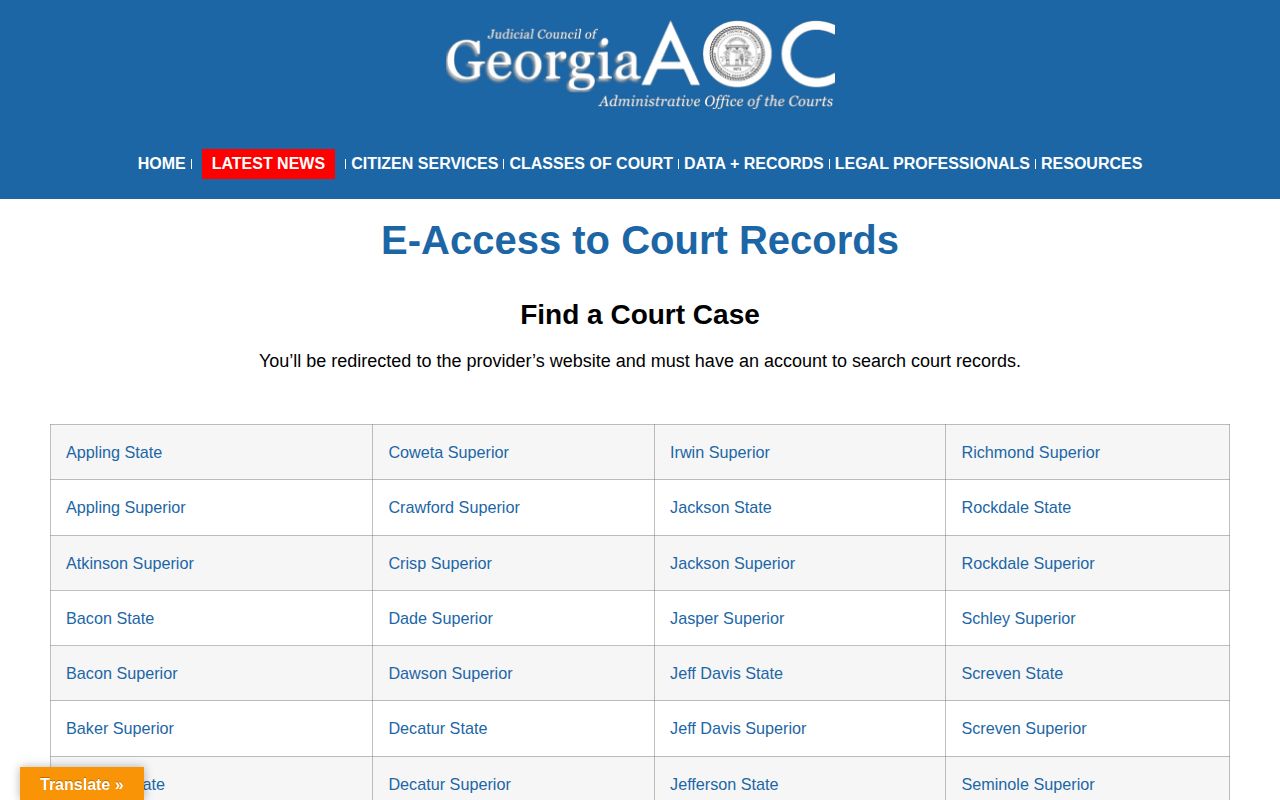
Georgia Courts E-Access routes users to a provider. Searching there requires an account. The Georgia Courts records page lists that starting point along with participating court providers, and it works as a route rather than a complete statewide case index.
For a historical booking, ask today's custodian first. An archive can describe a collection. It may hold no photo at all. A news story can point to a court file without being the official record. Old records shift between local offices and repositories over time. Write the source date and status beside every result you keep. A name match alone never proves identity. Check each case outcome at the individual level before drawing any conclusion.
Note: A search that returns nothing means no record surfaced. That result does not mean an arrest never happened.