
Georgia's Fugitive Notice Network
Georgia's official sources do not add up to one live, county-by-county wanted roster. The Georgia Bureau of Investigation's Fugitives page describes the Southeast Regional Fugitive Task Force. That unit tracks fugitives, escapees, and dangerous felons in the metro-Atlanta region. The scope matters here. It is a state agency page. It never promises that every Georgia warrant appears on it. The GBI's Cases page is a case and press-release index, not a complete active-warrant search.
The Georgia Department of Corrections handles escape and absconder work through its Fugitive Apprehension Unit. Federal agencies publish selected notices under their own jurisdiction. For a county matter, the sheriff and the courts remain the right starting point. Read each notice as a time-stamped agency request. Then check it against the issuing office and the court record. The GDC offender-search help explains the active, inactive, and all-offender filters. Those filters apply to corrections profiles. They are not a complete fugitive index.
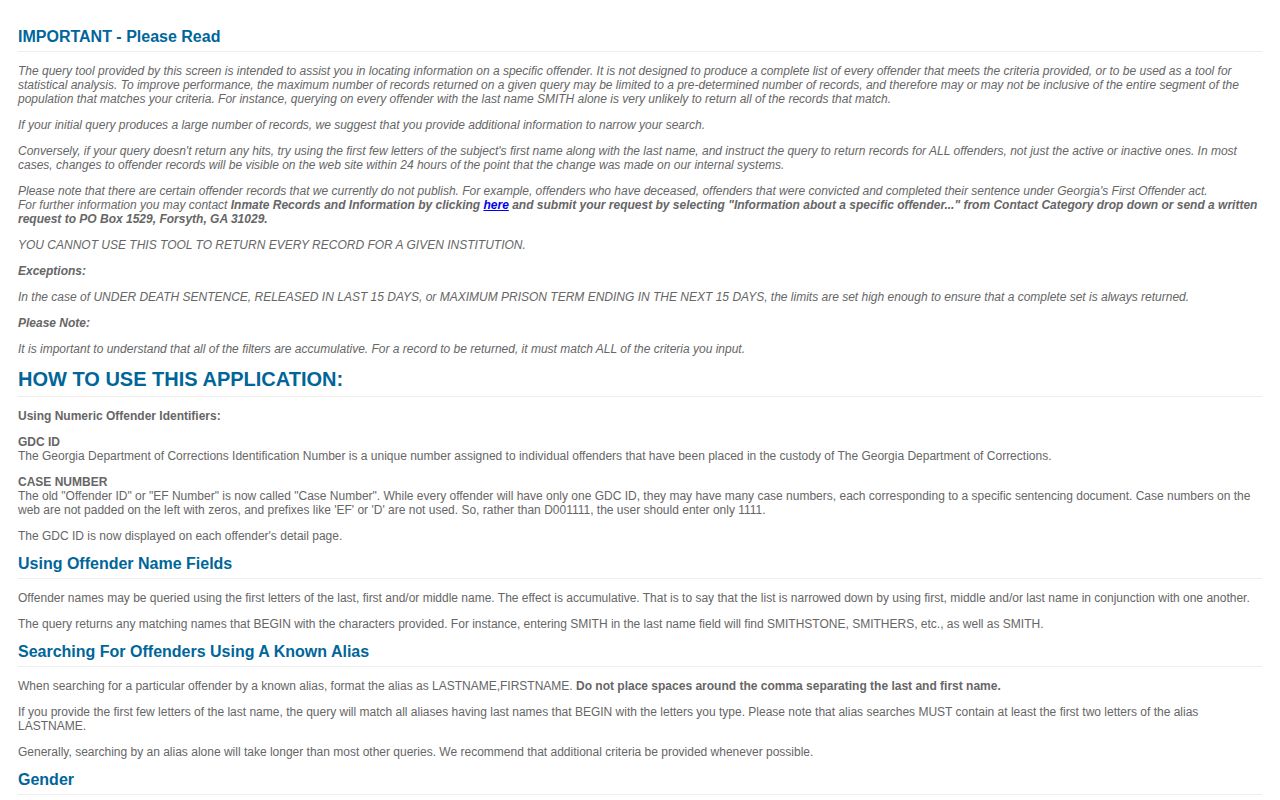
Those filters can change which state profiles appear. They do not replace current notices from GDC's Fugitive Apprehension Unit. The GBI Fugitives page shows the official route for this regional work.
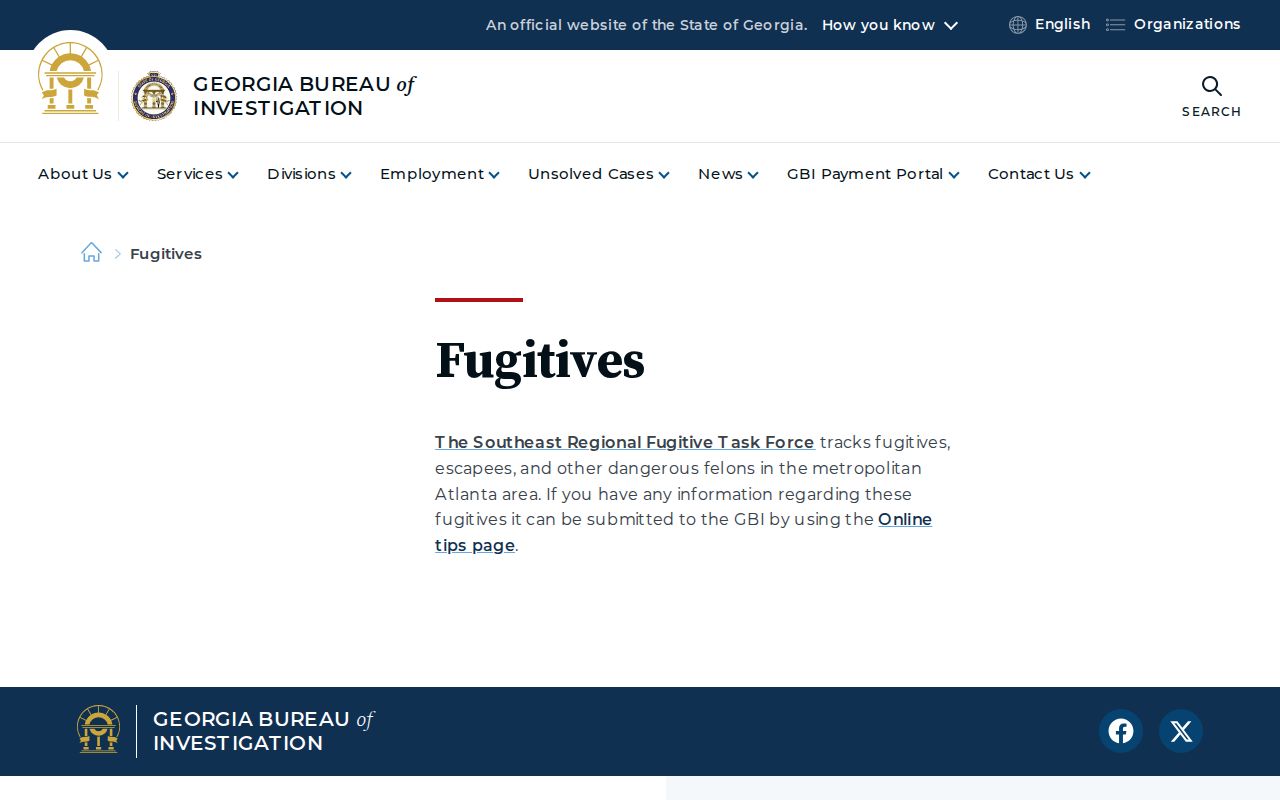
The GBI page itself describes the task force and links to a tip route. It is not a statewide booking-photo feed. Go back to the original notice to verify current details.
Georgia Wanted Source Inventory
These official sources answer different questions. The photo column describes what a source offers, not a guarantee that each current notice carries an image. Open the notice itself. Check its issuing agency and date, and treat an old search result as proof of nothing.
| Official source | Scope | Photo and list limits |
|---|---|---|
| GBI Fugitives | Southeast Regional Fugitive Task Force work in metro Atlanta, including fugitives and escapees. | The page explains the task force and tip route; it is not a complete statewide warrant roster. |
| GBI Cases | Case information and press releases. | Not a full warrant list; check the underlying agency and court record. |
| FBI Atlanta Wanted | Selected federal wanted or missing-person notices. | Use the individual official notice; it does not cover county bookings or every federal case. |
| U.S. Marshals fugitive investigations and district pages | Federal fugitive work across the Northern, Middle, and Southern Districts of Georgia. | District pages are selective and may show no current profiles; they are not a county roster. |
| GDC releases and escape rule | State-prison escape and absconder notices. | Reviewed sources did not establish one continuously updated public DOC-absconder index. A dated release can become stale. |
| County sheriff or court | A county’s own warrant, case, or wanted notice, when publicly offered. | Availability and photo practice differ; route through the county’s official site. |
The U.S. Marshals Service, for example, divides Georgia among three federal districts. Each district page is selective. A missing profile there says nothing about whether a local court issued a warrant. Use the district tied to the case and verify the current notice.
Stick to text links for official notices. Do not copy wanted photos, invite face matching, or rank people by a notice. A photo can support a current identification request. But it proves nothing by itself and never shows a later court outcome.
Note: A current profile or photo depends on each agency's publishing choice and may be absent from its notice.
Georgia County Warrant Checks
A local warrant question starts with the county or court that may have issued it. Georgia's 159 counties share no single public warrant interface. Local arrest systems vary just as much. One county posts a public roster, another shows only text or recent bookings. Some have none at all. A booking roster tells who an agency lists as in custody. It does not list people with active warrants.
Use the Georgia County Directory to find the relevant local government site. Then follow its sheriff, jail, clerk, or court links. Georgia Courts' E-Access entry point can lead to available case records. Provider coverage varies. A docket and an active-warrant confirmation answer related but separate questions. Ask the issuing clerk or law-enforcement custodian to confirm current status. The Georgia Courts E-Access directory shows where to begin locating participating court record providers.
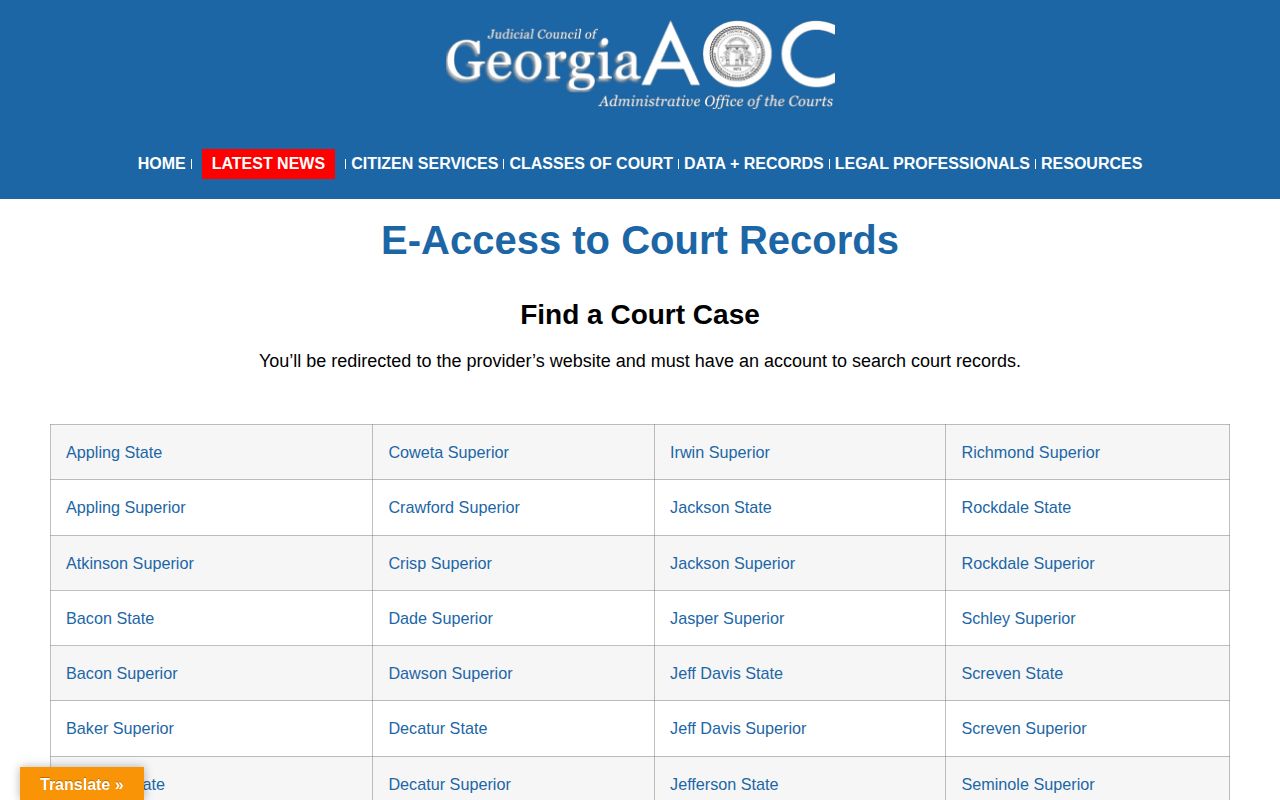
The directory routes users to available court records, not a live statewide warrant checker. Contact the issuing court or law-enforcement custodian to verify status yourself.
For a written request, name the person and the likely county. Give the date range and the record sought. Ask whether the agency holds a warrant record. Ask what official route it uses to confirm current status. Never assume that an empty results page means no warrant exists. The source may be limited, stale, or outside that court's jurisdiction.
Note: A county roster shows agency-listed custody. A court docket tracks filed case events and recorded outcomes.
Report a Georgia Fugitive Tip
Send tips to the agency named on the notice. The GBI, for the fugitive work described above, offers both an online route and a phone route. Do not count on anonymity. Do not count on a reward. Follow the instructions the bureau currently posts. Before you send anything, confirm the notice is current and belongs to that office. Share only what you actually know. Never follow someone to confirm a sighting, and never post an address or ask the public to name a face from a photo. Tips go stale just like notices, so check the source date first.
- Read the full official notice and note the issuing agency and date.
- Send only information you know through that agency’s official form or listed tip route.
- For immediate danger, call 911. For a non-emergency lead, use the agency’s own tip channel.
Southeast Regional Fugitive Task Force information
Online tip form
Tip hotline information
Safety: Never approach, follow, or detain anyone. Call 911 for immediate danger. For non-emergencies, use an official tip route and let law enforcement make the contact.
Check a Georgia Warrant Safely
A careful check follows a short source trail. It never rests on a photo or a repost. Go through the issuing agency whenever you can. If the matter might involve you personally, a lawyer or the court can lay out the right next step without leaning on a stale public page.
- Set the jurisdiction. Identify the county, court, or federal district tied to the event. A GBI task-force page or FBI notice cannot confirm every local warrant.
- Open the official source. Start with the sheriff, court clerk, or issuing agency’s own page. Use Georgia Courts E-Access to find available case context, not as a blanket active-warrant checker.
- Ask the custodian to verify status. Give enough identifying and case information for the office to distinguish records, then ask whether the warrant is active, recalled, or otherwise changed. Follow its stated request process.
- Confirm the case outcome. Check the court docket or clerk for later action. A warrant notice may remain indexed after capture, recall, or a change in the charge.
- Resolve a personal concern through counsel or court. Do not use a wanted list to plan a confrontation.
Federal matters run on a separate track. The FBI Atlanta page covers selected federal notices, and U.S. Marshals district sources do the same. Custody locators answer only narrow questions. A federal custody result is no county warrant search. The jurisdiction has to match the question. When no public warrant search appears, use the agency's published records or clerk contact route. Ask which custodian can confirm the record. Georgia's Open Records guidance points written requests to the agency likely to hold the record. A request cannot force a release, but where an exemption applies, the reply can still name the proper custodian or give the reason for a denial.
| Official route | Useful for | Limit |
|---|---|---|
| County sheriff or issuing court | Local confirmation of a county warrant or case, when that custodian offers a public route. | Ask the office that holds the record; a nearby county page may not show it. |
| Georgia Courts E-Access | Finding available docket and disposition information. | Provider coverage varies; docket access alone is not a live statewide warrant check. |
| GBI, FBI, or U.S. Marshals | Selected state-task-force or federal notices. | These are jurisdiction-specific sources, not one unified list. |
| GDC notice or release | A dated state-prison escape or absconder notice. | No comprehensive, continuously updated public absconder index was established in the reviewed sources. |
Georgia Warrant and Notice Types
"Wanted," "fugitive," and "absconder" are not the same label. A source may describe a warrant, a charge, an escape, or another agency process. Read the notice's own wording. Verify the current status with the issuing office rather than inferring a legal category from a headline.
- Warrant notice
- An agency notice that says it seeks a person under a warrant. The issuing court or agency confirms the warrant’s type and current status.
- Disposition
- The court-recorded result of a case, such as dismissal, acquittal, plea, or conviction.
- Absconder release
- A dated corrections notice about an escape or absconder matter. It does not establish that the notice is still current.
| Notice or record | What it states | What to verify |
|---|---|---|
| Warrant or wanted notice | An agency seeks a person under a warrant, charge, or other process. | Issuing agency, notice date, current status, and related court record. |
| Escape or absconder release | A corrections agency reports an escape or absconder matter. | Whether the release is current and whether the person has been apprehended. |
| Court docket or disposition | A court record shows filed events and any recorded outcome. | Whether later entries changed the case; a booking page is not the disposition. |
GDC's Fugitive Apprehension Unit counts its own work. Its FY 2024 annual report tallies 363 felony arrests, 34 sex-offender arrests, and 44 absconder recaptures. Those are historical figures. They do not count people currently wanted. The FY 2024 report gives context for the agency's work, but it creates no live public roster. The Georgia Archives local-government schedule separately sets a five-year retention period after apprehension for fugitive or wanted-person files.
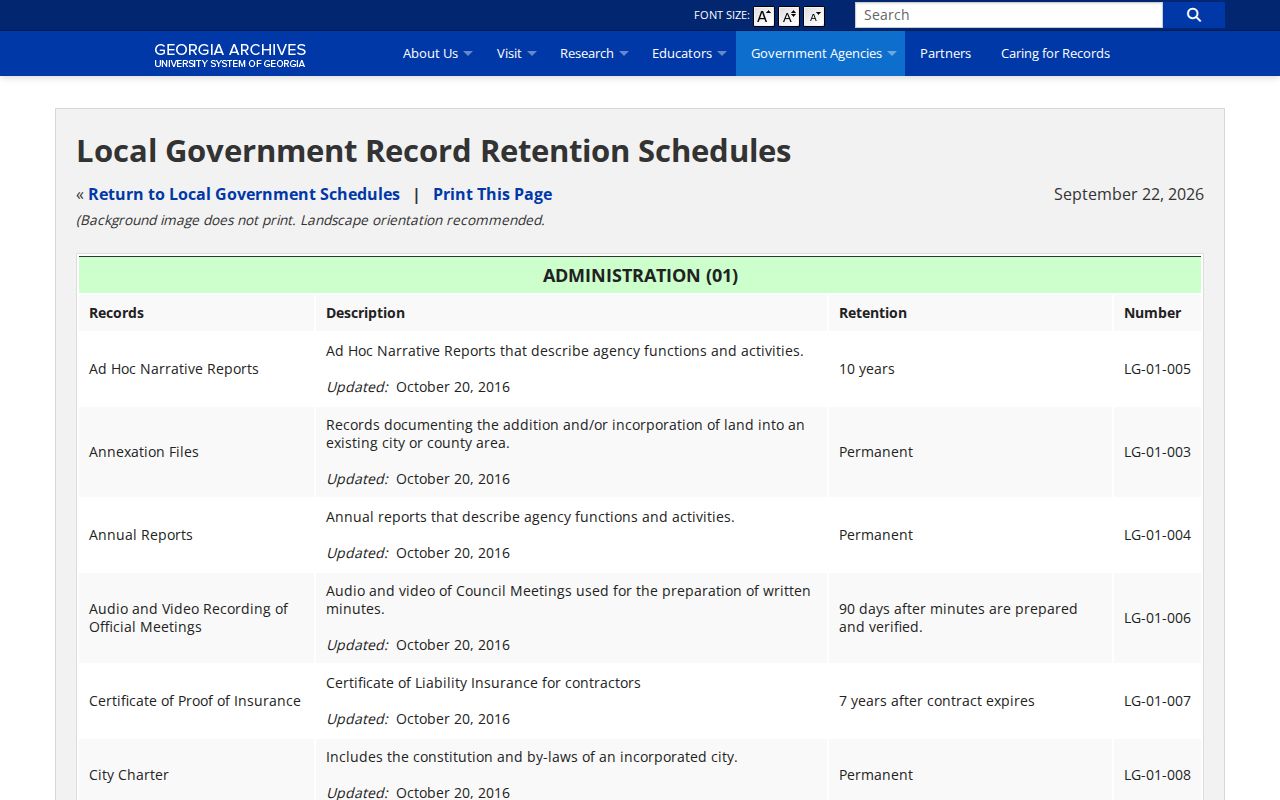
A retention period covers the record class. It does not confirm that a particular notice is still active or that an online profile still exists.
Georgia Federal Custody Checks
A wanted notice and a custody locator answer different questions. The Federal Bureau of Prisons inmate locator covers people in federal prison from 1982 forward. It searches custody records only. It offers no public mugshot field. It is not a list of everyone federal agents seek. A missing result proves nothing about past detention.
The ICE Online Detainee Locator works differently. It accepts an A-number and country of birth, or an exact name and country of birth with an optional birth date. Juveniles are excluded. Booking photos do not appear. Exact matching, transfer, and release timing can all affect results. When a custody question stays open, use the current official locator and the agency's help route.
Neither locator confirms a Georgia county warrant. Keep the record type in view. A fugitive notice is an agency request, a custody tool is a limited locate service, and the court docket verifies a filed case and its outcome.
Note: BOP and ICE searches use distinct federal custody scopes and do not establish state or county warrant status.
Georgia Notices Need Court Checks
A wanted page captures one moment. A court record is a separate source for filed charges and disposition. Georgia Courts' E-Access directory can locate participating providers. A county clerk may hold the controlling docket. A court result may show a dismissal, a plea, a conviction, or another outcome. Report only what the record supports.
Notices also change. A warrant can be recalled, a charge amended, or a page left searchable after a capture. Before sharing a tip or repeating a notice, reopen the issuing agency's page and check its date. If no update date is visible, contact the source instead of filling one in.
Verify before you share. Check identity and current status with the official agency and the court.
A county booking entry is not a state-prison profile. Neither one is a court disposition. Georgia's statewide booking-record and source overview explains how to tell a county booking entry, a state-prison profile, a federal custody result, and a court disposition apart, since they answer different questions.