
What GDC Records Cover
The Georgia Department of Corrections tracks people serving state sentences. The query works one name at a time. GDC records come later in the process. County jail comes first. Someone booked by a sheriff may never appear there, because the arrest has not led to a state-prison sentence. A person waiting on trial, bond, or transfer stays a county custody matter until official records say otherwise.
GDC is not a statewide arrest log. It will not count every person behind bars. The tool exists to locate one individual and open a profile when GDC makes a record public. Names and fields can overlap with court or jail files. Still, the GDC ID is the steadiest link within its own system. The profile does not govern the county booking event or the final outcome of each charge.
Read the resource narrowly. GDC shows a state corrections record. It may show an offender photo too. It cannot prove a fresh arrest, a local jail stay, or a current county warrant. Sheriffs, jails, and the issuing court hold those answers. County booking sources are collected in the Georgia County Directory.
How to Search GDC Mugshots
The official GDC Offender Query opens with name and identifier fields. A GDC ID narrows things fast. Use it when you have one. GDC's help page warns that searches run broad or narrow, so an empty result may just mean the name query was too tight. Try a wider spelling before giving up. The form also filters active, inactive, or all offenders, plus personal and case criteria. Add only enough detail to trim the list. Compare more than one identifier. A common name alone proves nothing, and the query targets one specific record rather than a browsing gallery.
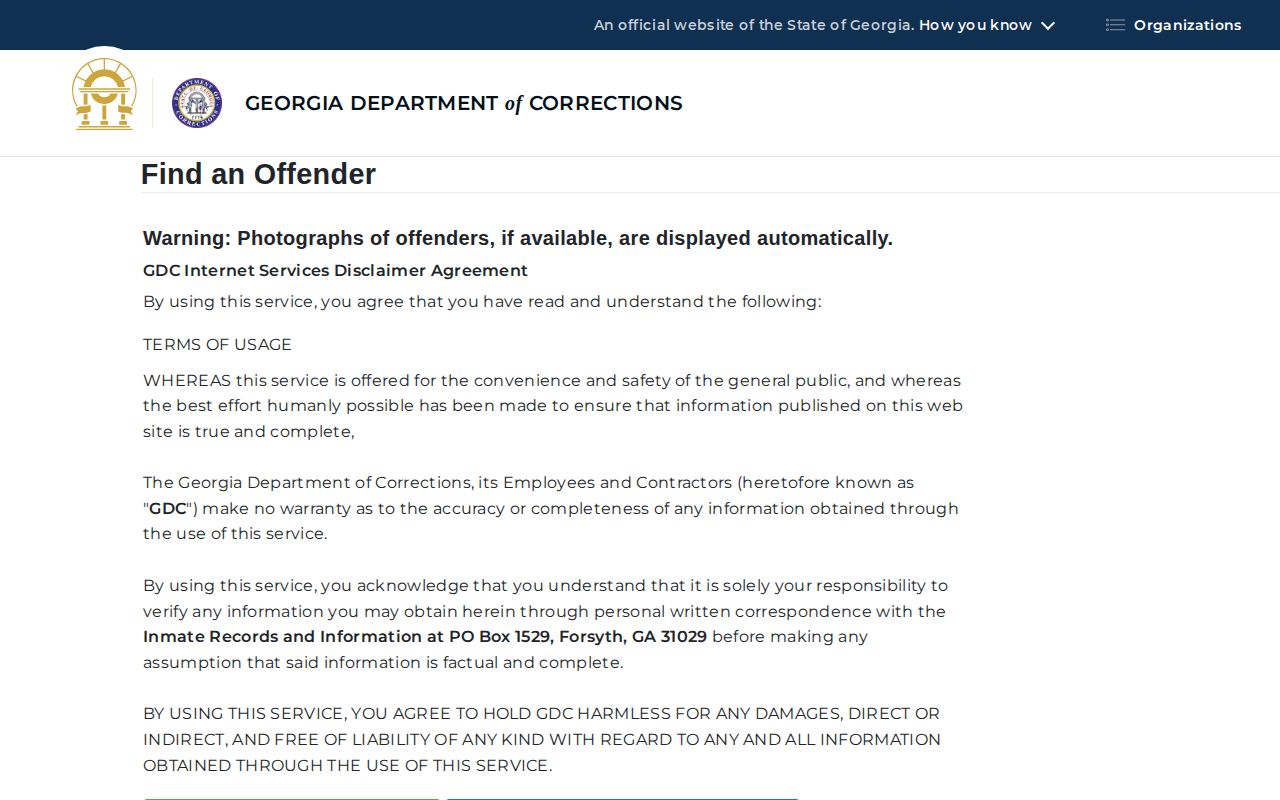
The image shows the official search interface. No gallery of photos greets you. The form only starts the job, so confirm details against the official profile fields.
- Open the GDC Offender Query from the Georgia Department of Corrections offender-information page.
- Enter a GDC ID if known. Otherwise search by surname and first name, then add age or other permitted fields only when needed.
- If a narrow query returns nothing, follow GDC’s help and try the first four letters of the last name with the all-offenders option.
- Open the likely profile and compare the full name, GDC ID, location, sentence information, and any photo shown.
- Read the update context and confirm any custody or legal question with GDC or the relevant court.
GDC warns that search data can shift after internal updates. It is no live movement tracker. Rely on GDC's live page for the current record. A cached listing or an old screenshot may lag behind the form and result you see today.
A miss can mean many things. The person might sit in a county jail, be held by another agency, or fall outside the public search's scope. GDC also keeps some records unpublished. Spelling quirks can hide a match. A filter set too tight can do the same, so widen the surname and toggle active, inactive, and all-offender before filing a request. An empty result settles nothing. It cannot tell you a charge was dismissed or that a person never served prison time.
GDC Offender Search Fields
A few tools shape the query before a file ever opens. Some fields are hard identifiers. Others work more like filters. The GDC ID anchors it all, giving a firmer identity check than a name or an age ever could on its own.
| Field or filter | How it is used | Reader check |
|---|---|---|
| Name | First and last name; broad searches may return many records. | Try a name variant or first four surname letters if needed. |
| GDC ID | System identifier for an offender record. | Prefer this when known and compare it on the profile. |
| Case or old number | Search keys for a case or prior record number. | Do not confuse a court number with the GDC identifier. |
| Sex, race, age, physical traits | Personal descriptors that narrow a name search. | Use as supporting details, not proof of identity. |
| Major offense | Search criterion tied to an offense field. | Read the actual profile and court record for context. |
| Sentence status / institution | Limits results by sentence or placement context. | Placement information can change and is not a movement alert. |
| Active / inactive / all | Chooses the scope of records returned. | An inactive result is not proof of a current prison stay. |
Treat the results list and the profile as two separate steps. A criterion the form accepts may not show up as a labeled field. Not every profile labels it the same way. Spelling slips can end a search early. So can narrow record scope, a missing photo, or details GDC simply withholds. So when nothing comes back, look at what you typed first. The absence of a hit means nothing on its own.
Once a match surfaces, start with the GDC ID. Then work through the location, status, sentence information, and profile date. Physical descriptors can help sort similar names apart. Still, they make a poor substitute for a confirmed identity. They have no place in a public post. Keep the source date attached to anything you note. Status fields can shift after internal updates.
What a GDC Photo Shows
Not every GDC profile shows a face. The department's FAQ says photos appear automatically when one is on file, and images get added as time goes on. Some records simply have no public photo. Others have not been uploaded yet. A blank image space still points to a real GDC record, and it says nothing about whether a county agency once took a picture. That picture belongs to the state, in other words. It sits in a corrections profile, apart from any county booking record. It shows an identification image GDC holds for its own offender file. It does not tell you where the person is right now. Confirm any legal outcome through the court docket. Confirm current location through the agency's current information.
Profiles can carry a name, GDC ID, case or old number, sex, race, age, physical descriptors, major offense, sentence status, institution, and an active or inactive scope. What shows up depends on what GDC keeps and publishes. Read fields for what they are. A profile will not hand you a release date. It also will not confirm a conviction on a separate county charge or a current county booking from fields it never contained.
GDC Photo Updates and Limits
Updates run on a general schedule. GDC's search help says a change usually becomes visible within 24 hours. That is a description of internal timing, not a live tracker. A transfer will not pop up the moment it happens. GDC withholds transfer dates for security reasons. The offender query is a lookup tool. It is not a location feed or a movement alert.
Old profiles linger. GDC keeps many former or inactive offenders searchable, though that coverage is not complete. The department says some records are left out. Some of them finished a First Offender sentence. Georgia's restriction and sealing rules can also apply. Under HB 162, some cases qualify. A case sentenced on or after July 1, 2026 gets automatic restriction and sealing at sentencing. Check the court record and the GDC record for the true status. Never assume an old profile just vanishes.
State and county records are different animals. A county may hold a photo or booking number while the state search shows no entry, and a state profile can outlast a county roster that has already dropped a released person. Questions about an arrest, bond, release, or a local booking photo go to the county sheriff or jail that made the record. State prison questions go through GDC's own open-records route instead. The GDC search-scope help describes filters covering active, inactive, and all offenders. Pick a scope with that in mind.
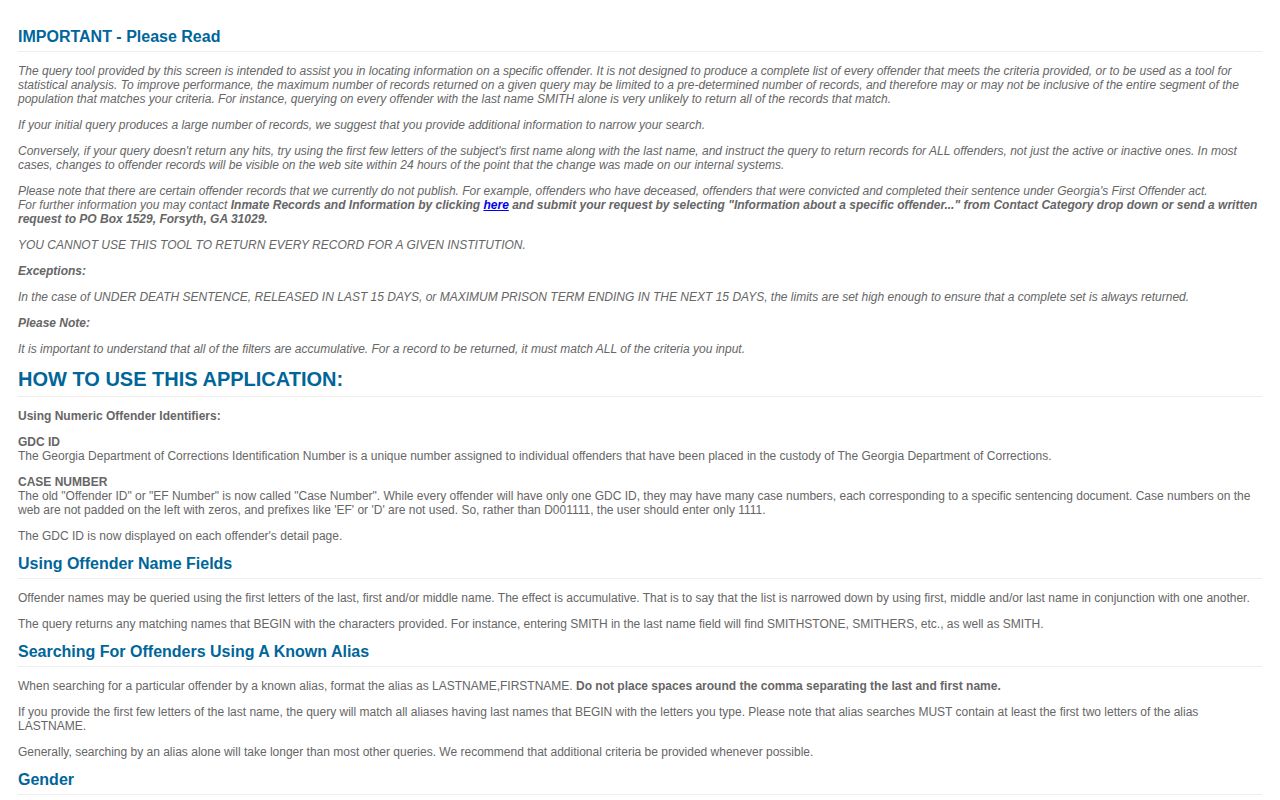
Those choices shape what a query returns. A record missing under one filter may surface under another, within GDC's publication limits.
GDC Photos vs County Bookings
Both systems use photographs, but for different events. A county booking image is made at local intake. A GDC offender image belongs to a state corrections profile. Search according to the person's custody stage, current or past, rather than the shared fact of a photo.
| Record | Custody stage | Photo / record limit |
|---|---|---|
| County booking photo | Arrest and local jail intake, with later release or transfer. | County policy, vendor settings, Open Records exemptions, and O.C.G.A. § 35-1-19 shape access. |
| GDC offender photo | State corrections sentence or offender record. | Shown when available and uploaded; search scope and omission rules apply. |
| Court docket | Filed charges and court proceedings. | Provides disposition context, not a jail roster or photo archive. |
A county booking often ends first. Release changes things. A person freed from county jail may drop off the current roster. The booking data stays with the local custodian. A prison sentence shifts the record layer to the state. Even then, the county arrest record and the prison profile stay separate.
Track the details apart. Keep the booking date, agency, county, and court case number separate from the GDC ID. Verify each event with the office that created it. A matching photo alone proves little, since names repeat and images age. The Banks County booking search shows how a local roster pairs intake fields with photos.
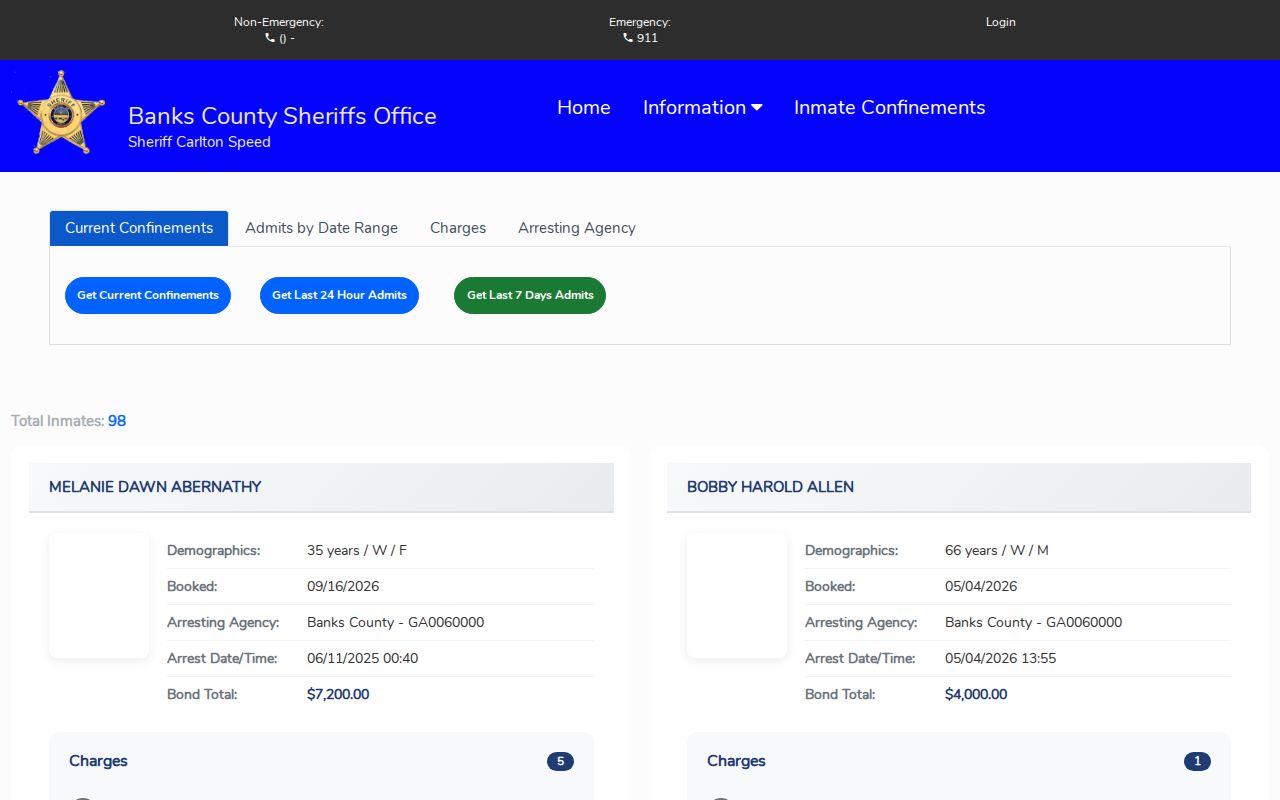
That county search covers local booking intake. It can show a different photo trail than the GDC profile. The Fulton County daily bookings dataset offers another contrast: dated records, no mugshot field.
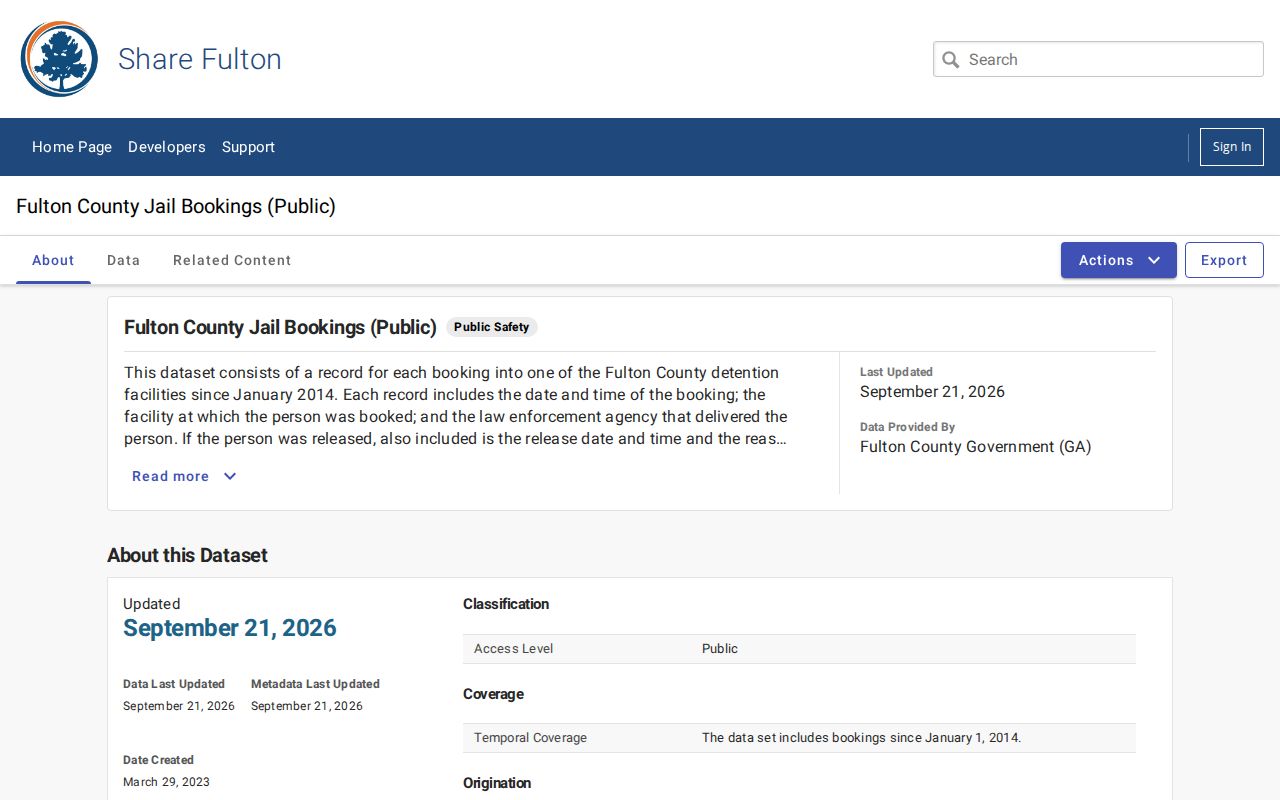
Local sources do not stretch GDC coverage. The booking county stays custodian of its intake record and any photo.
Request GDC Offender Records
Records requests follow a different door. Use the GDC Open Records request page for any request. The offender-search form is only a locator. It takes no records requests. Spell out the record, the person, any known GDC ID, and a date range. Ask for electronic copies when they fit, an estimate before work starts, and the statutory basis for any redaction or denial.
GDC sets the clock and the price. Under Georgia's Open Records Act, an initial response is generally due within three business days. Nonmedical copies generally run 10 cents per page. Search and redaction time may be billed at the lowest-paid qualified employee's hourly rate, and these are stated terms rather than a promise that every request costs or yields the same.
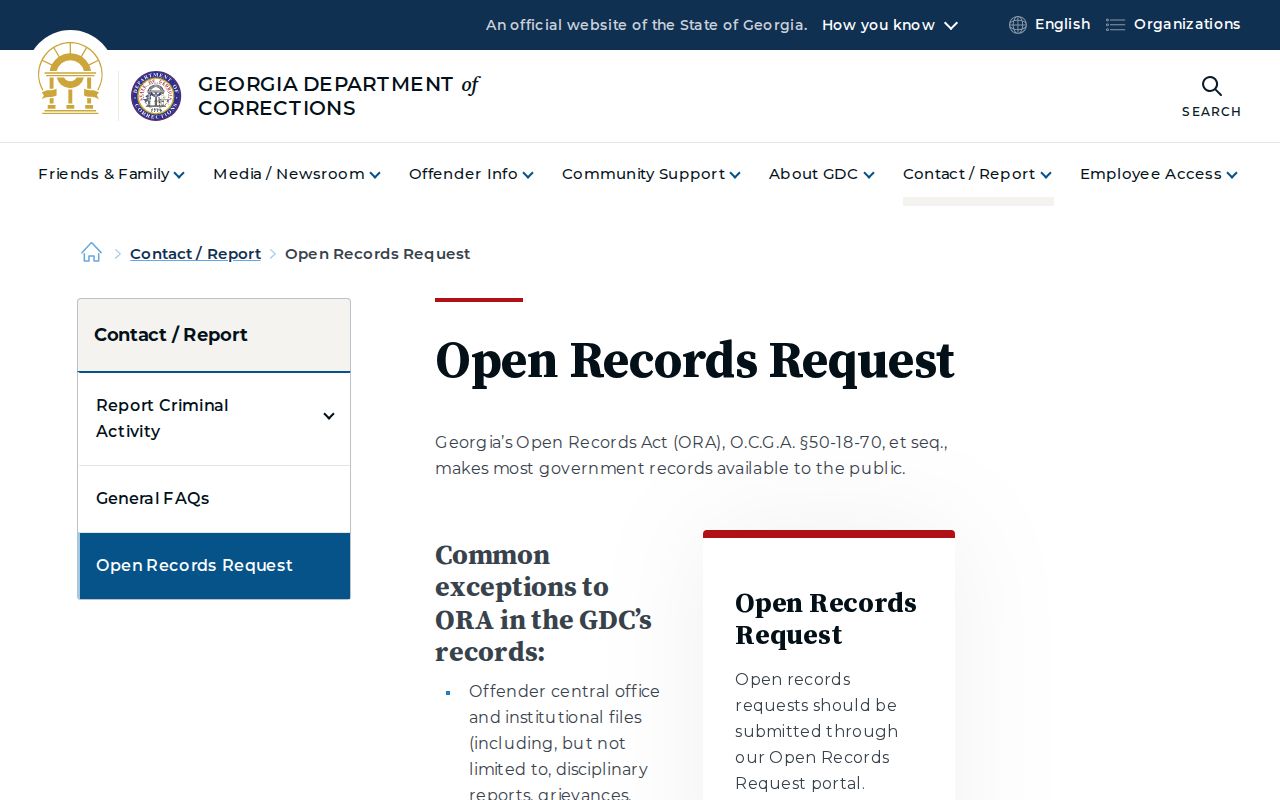
GDC runs its own request route for corrections records. Some categories sit off limits or get redacted. Central and institutional files are one example. So are investigations and intelligence material. Employee personnel data, safety and security records, and medical or mental-health information round out the list. Name the record type you actually need. Expect protected content to come back withheld or blacked out where the law demands it.
The three-business-day clock covers only the first response under the Open Records Act. It is not a promise that every search or copy job finishes that fast. A custodian may need extra time to pull responsive records, weigh exemptions, or prepare redactions. Narrowing your ask to a specific record type and date range helps clarify scope. It cannot override statutory limits. Hold onto the request and any cost estimate so the reply can be checked against what you sought.
For offender, transfer, or placement details, contact GDC directly. Transfer dates stay unpublished for security reasons. County booking records belong with the county sheriff or jail. Questions about a filed charge or disposition go to the court clerk. A GDC search result should never stand in for either of those records.
GDC Fugitive Notices and Scope
GDC fields a Fugitive Apprehension Unit for escape and absconder work. That unit does not add up to one live, public statewide absconder roster. The state material includes dated news releases and an agency rule on escape notifications, not a single running index of everyone GDC seeks. Old releases age out. Some get superseded. Treating a stale release as proof someone is currently wanted is a mistake.
The unit's own numbers come from its annual reporting. In fiscal year 2024, GDC logged 363 felony arrests, 34 sex-offender arrests, and 44 absconder recaptures. Those are past performance counts. The GDC fiscal year 2024 report is the source for all of it. Each release carries its own date and jurisdiction, so check the current tip channel before acting on anything. If danger is immediate, call emergency services instead. Never approach or try to detain a named person yourself.
Georgia's booking layer and prison layer stay separate even when both hold an arrest photo. GDC owns the authority on its offender profile. County agencies and courts control the earlier booking and case record. When the right layer is unclear, go back to the agency name, date, and case type printed on the source record.