
Georgia Busted Mugshots and Intake
A Georgia booking begins when an agency brings someone to a county jail. The jail logs the person into custody. It may take a booking photo for identification. From there the paperwork splits, because each office records a different event. The sheriff holds jail records. The clerk holds the docket. Corrections tracks state sentences.
A roster shows who is in custody now or who entered recently. It is not the arrest report. It is not the court file either. "Booked" simply means the jail recorded an entry into custody. What happens next belongs to the courts: a prosecutor may file a charge, decline the case, or route it elsewhere. A judge may dismiss it, accept a plea, or hold a trial. The docket is where those outcomes live. Treat Georgia busted mugshots as dated booking records, not as conclusions about guilt or a live measure of custody.
- Booking
- The jail’s intake process and custody record after an arrest.
- Arraignment
- A court hearing where charges are presented and a plea may be entered.
- Bond
- A court-set condition for release while a case is pending.
- Disposition
- The court’s recorded outcome for a charge or case.
- Record restriction
- A Georgia process that limits some access to eligible criminal-history records.
Georgia’s Two Mugshot Laws
Two Georgia statutes govern different parts of the photo trail. The Open Records Act, O.C.G.A. §§ 50-18-70 through 50-18-77, defines public records broadly. That includes photographs and computer records kept for public business. But exemptions still apply. Pending law-enforcement records can be withheld under § 50-18-72(a)(4), and initial arrest and incident reports get different treatment. A written request is no guarantee a jail will hand over a photo or an unredacted file.
The second law, O.C.G.A. § 35-1-19, defines the booking photograph itself. It restricts when an arresting agency can post or disclose one, including cases where the recipient plans to run it on a site that charges for removal. Anyone asking an agency for a photo must sign a statement that the intended use complies with the law. That does not make every mugshot secret. Nor does it force counties to publish photos. The Georgia Attorney General’s mugshot guidance walks through the agency limits and the separate commercial-publisher process.
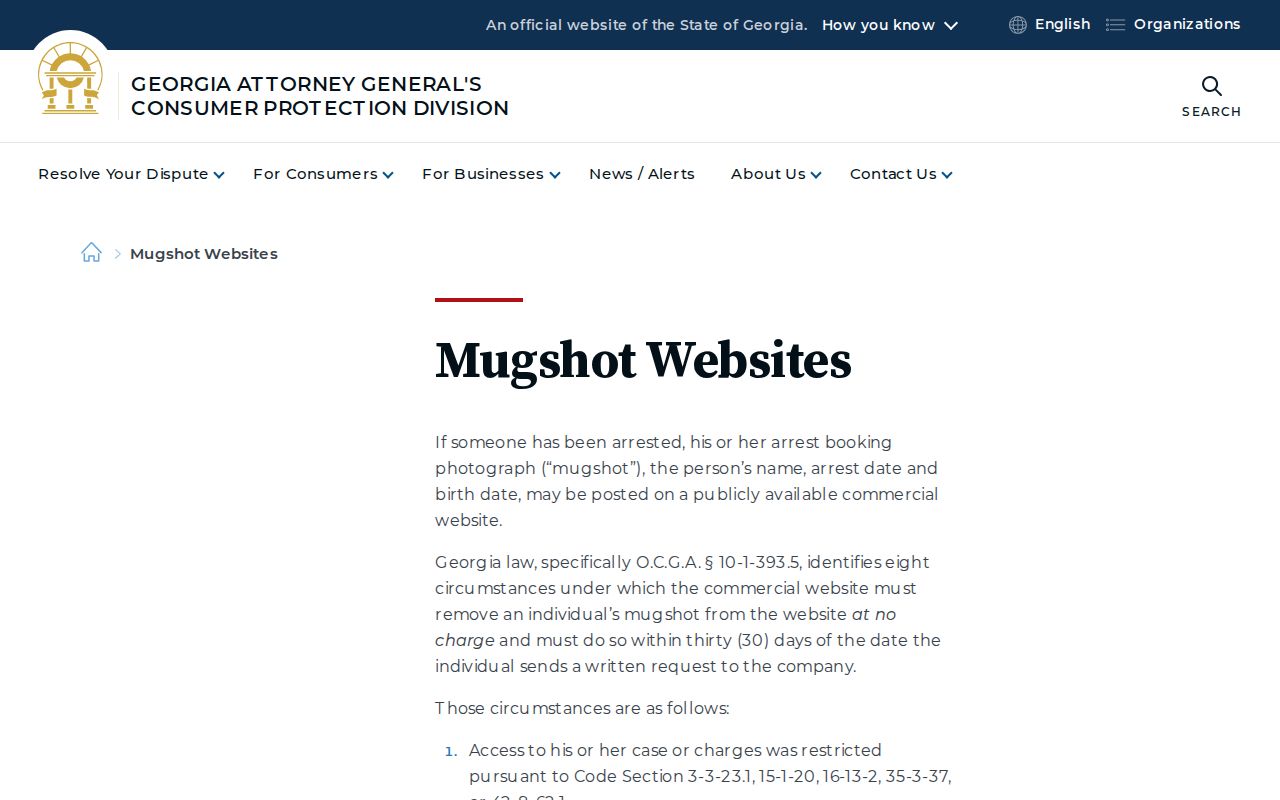
The Attorney General’s page lists eight qualifying outcomes under O.C.G.A. § 10-1-393.5. Meet one, and a commercial mugshot publisher must act. The image must come down free within 30 days of proper written service. The request needs identifying details and the arresting agency. Delivery must go by certified mail with return receipt. Statutory overnight delivery to an allowed address is the other option. A news exception applies. This statutory route is narrow. It will not wipe copies held by other publishers or search engines.
The law grew in stages. HB 150 in 2013 created the no-cost publisher-removal rule. HB 845 in 2014 added agency-side controls and the signed-use statement. Proposed HB 10 is not law. The 2026 HB 162 change takes effect July 1, 2026. It brings automatic restriction and sealing at sentencing for qualifying First Offender Act cases entered on or after that date. It reaches certain jail and law-enforcement histories, fingerprints, and photos. Eligibility depends on the actual case and current law. Confirm through the court or agency. For deeper state-law and removal detail, see Georgia’s public mugshot laws. The Georgia Open Government overview lays out the public-record definition and its exemption framework.
That framework explains the split. An agency can release one record and withhold another part of the same file. Juvenile records follow a separate path. Georgia law shields children’s records and photos. The Department of Juvenile Justice says it generally cannot confirm or deny a youth’s custody. So never use an adult booking search to identify a child. Georgians say "record restriction," though many call it expungement. Restriction limits access for many non-criminal-justice users. It does not promise that a news story, county file, or private copy disappears.
Note: An official record change does not by itself remove copies held by a private publisher or an archive.
Georgia Booking Record Fields
Each layer answers a different question. A county booking record tracks an arrest into local custody. A Georgia Department of Corrections profile follows a state sentence and placement. A court docket tracks charges and outcomes. The field list below keeps those records separate. A county portal may expose only some fields, and others may need a request to the custodian.
| Record field | County booking record | GDC offender profile |
|---|---|---|
| Name / identifier | Name as published, booking number or inmate ID, and arresting agency where supplied. | Name, GDC ID, case or old number, and identifying traits. |
| Date / custody | Booking or arrest date and time, listed status, bond or release information if shown. | Sentence status, institution or location, active or inactive status, and update context. |
| Charge / sentence | Charge as booked, which is an charge, not a court finding. | Major offense and sentence fields associated with the state corrections record. |
| Photo | May be present, hidden, or unavailable under law and local portal settings. | Displays when a photo is available and uploaded; not every profile has one. |
| Court result | Usually not a final disposition field; verify with the court docket. | Does not replace the clerk’s case record for a specific charge outcome. |
Every booking record you pull should carry its own trail. Note the agency that holds it and the source URL. Note the booking date too. Say whether it reflects a current roster, an older booking, or a court outcome. Match a name to at least two details. Booking date plus county works; so does a booking number with an age. Look-alike names get people mixed up. Never merge records on spelling alone. Just because a portal displays extra personal data does not mean it should be republished.
Request a Georgia Booking Record
Direct your request to whichever office actually holds the record. Georgia's Open Records Act calls for a written request to the records custodian. That paper trail shows what you asked for. It also forces the office to name a specific exemption. That applies to anything it withholds or redacts. Ask for the booking data and the photo separately. Photo disclosure carries its own statutory limits, so treat the two as distinct requests. Electronic delivery, a cost estimate, and the retention schedule are all fair things to request up front.
Start with the Georgia Open Records request guide. The first 15 minutes of search and retrieval are generally free. Copies run up to 25 cents per page. Redaction or search time may be billed at the lowest-paid qualified employee's rate. The office can demand payment before delivery. That rule kicks in if the estimate tops $25. Treat these as statutory guideposts, not a fixed price for any particular request.
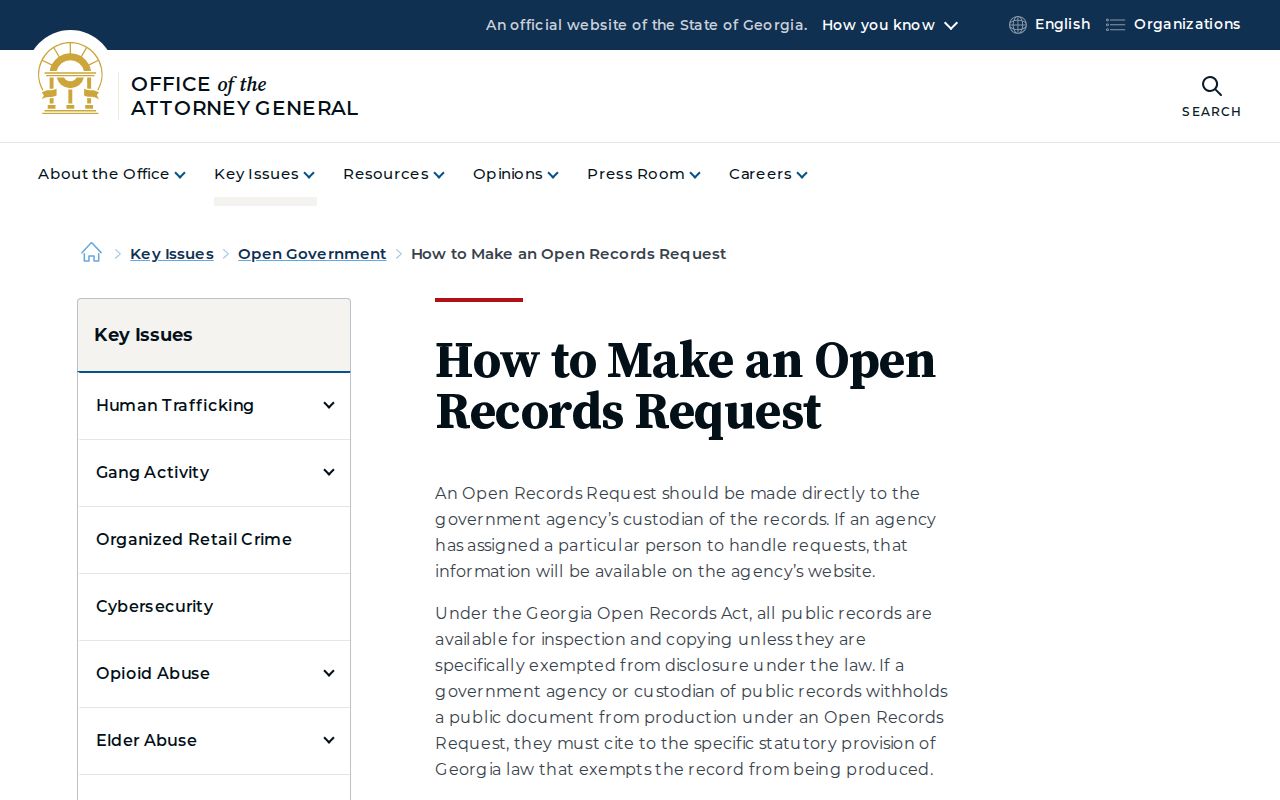
A county arrest means a county request. Pick the right county in the Georgia County Directory first. Then use that sheriff or jail's official records contact. State-prison records go through GDC's separate Open Records request page, never its offender-search form. For charges and final outcomes, the court clerk is the right door. The state's E-Access entry point works too. And a state request will never reach a federal record.
- Identify the likely custodian: county sheriff or jail for intake, police for a municipal incident, clerk for a court file, GDC for prison records, or the federal agency for federal custody.
- Give the person’s name, arrest or booking date, county, and booking number if known. Ask for the booking record, any legally disclosable photo, bond or release fields, and the applicable retention schedule.
- Request electronic copies and a fee estimate. If material is withheld, ask the custodian to name the exemption and identify any records that can be released with redactions.
- Use the court docket to verify a disposition, then send eligible restriction or removal proof to each relevant agency or publisher separately.
Georgia's retention schedule keeps jail booking records and their associated data for ten years after release. A jail register stays on file ten years after its last entry. Photographs get no guaranteed term of their own. Retention is not the same as public posting. A record that is not listed may still exist. It may be exempt, or it may have been lawfully destroyed. The custodian can tell you which.
Note: Ask the local custodian how a booking photo is classified, because the statewide schedule sets no separate retention term for photos.
Find Georgia Busted Mugshots
Let the custody stage drive your search. A recent arrest usually points to the county jail or sheriff. That office made the booking record. Once someone leaves county custody, the roster may drop them. The booking file still exists. A person serving a state-prison sentence belongs in the GDC offender search. Federal or immigration detention calls for a different locator. A court docket is what tracks what happened to a charge.
- Pin down the arresting or booking county. If it is unknown, start with the law-enforcement agency named in a reliable report, then use that county’s official site.
- Open the sheriff or jail roster and check its current, recent, released, or date-range options. A missing photo is common and does not mean no booking occurred.
- Check the county court clerk or Georgia Courts E-Access for a filed case and disposition. Coverage, access rules, and fees vary by court.
- Use GDC for a state-prison record, the Bureau of Prisons locator for federal custody, or ICE’s locator for immigration detention only when that custody layer fits.
- If a public portal has no match, send a narrow written request to the likely records custodian. Record the date and the source’s stated limits.
Follow the source order. Start with the local agency or jail, then the court clerk, then GBI or GDC for the relevant state record, and finally federal sources. A secondary index can surface a spelling variant or an old item. It cannot confirm that someone is still jailed. Use GDC only for the prison layer.
Where Georgia Busted Mugshots Appear
There is no single public statewide booking feed. The source depends on the county, record type, and stage of the case. A result should be labeled by its custodian and date so a current jail list is not confused with a historical dataset or a private copy.
| Source | What it can show | Status and limit |
|---|---|---|
| County sheriff or jail roster | Current or recent county custody, booking fields, and sometimes a photo. | Official first stop; fields and photo rules vary by county. |
| Arresting agency records unit | Booking or incident records held by that office. | Request when no public roster exists or the record has aged out. |
| County clerk or Georgia Courts E-Access | Filed charges, hearings, and court disposition. | Does not replace the jail roster; participating coverage differs. |
| GDC Offender Query | State-prison sentence and offender photo when available. | Not a county arrest search or a complete statistical roster. |
| BOP or ICE locator | Federal or immigration custody details within each locator’s scope. | Neither public interface is a mugshot gallery. |
| Private booking index or news report | May point to a copied booking entry or a reported event. | Secondary, potentially stale, and not a disposition record. |
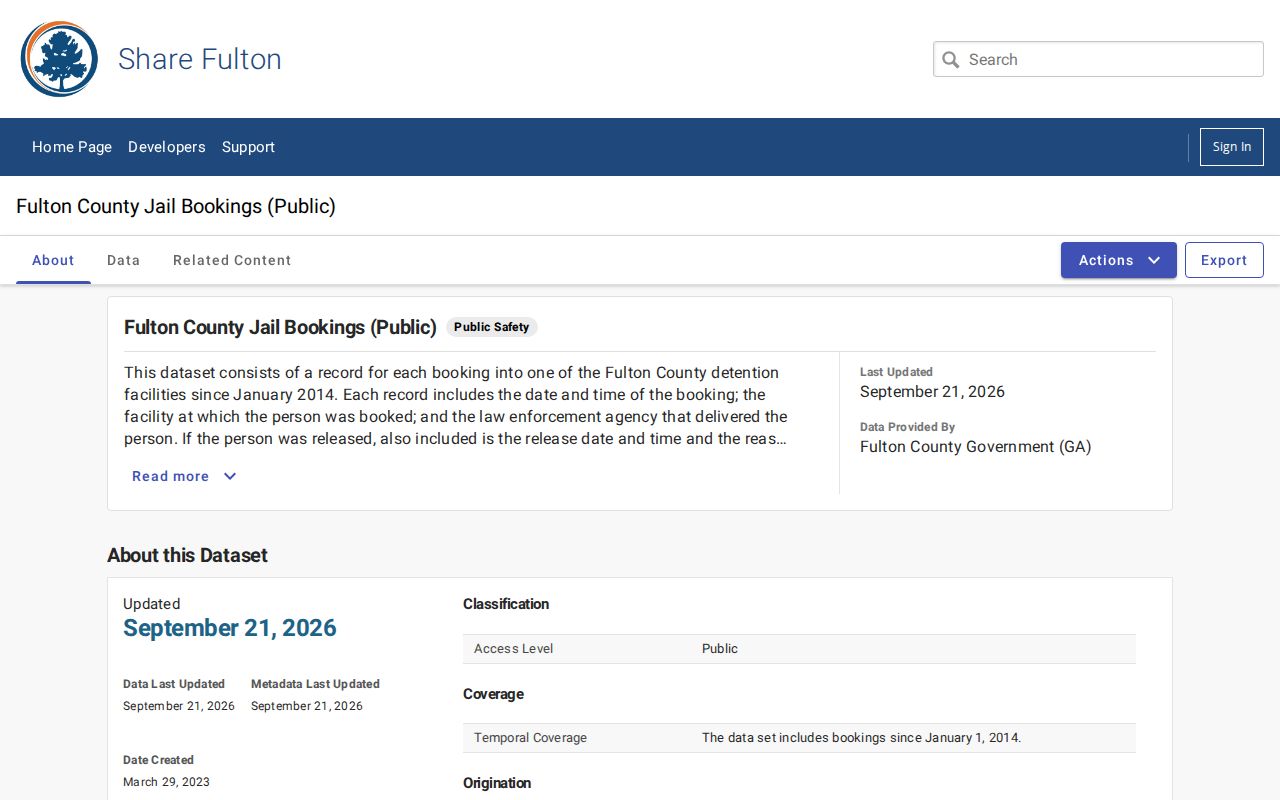
Fulton County posts a public booking dataset that updates daily and reaches back to January 1, 2014. Its documented columns include no mugshot field. The official Fulton bookings dataset works well for historical bookings and counts. It does not prove Fulton publishes every photo.
The Georgia Courts E-Access portal is a provider directory rather than a universal, free booking-to-disposition database. Its screen is just the starting point. For any specific case, the county clerk remains the authority.
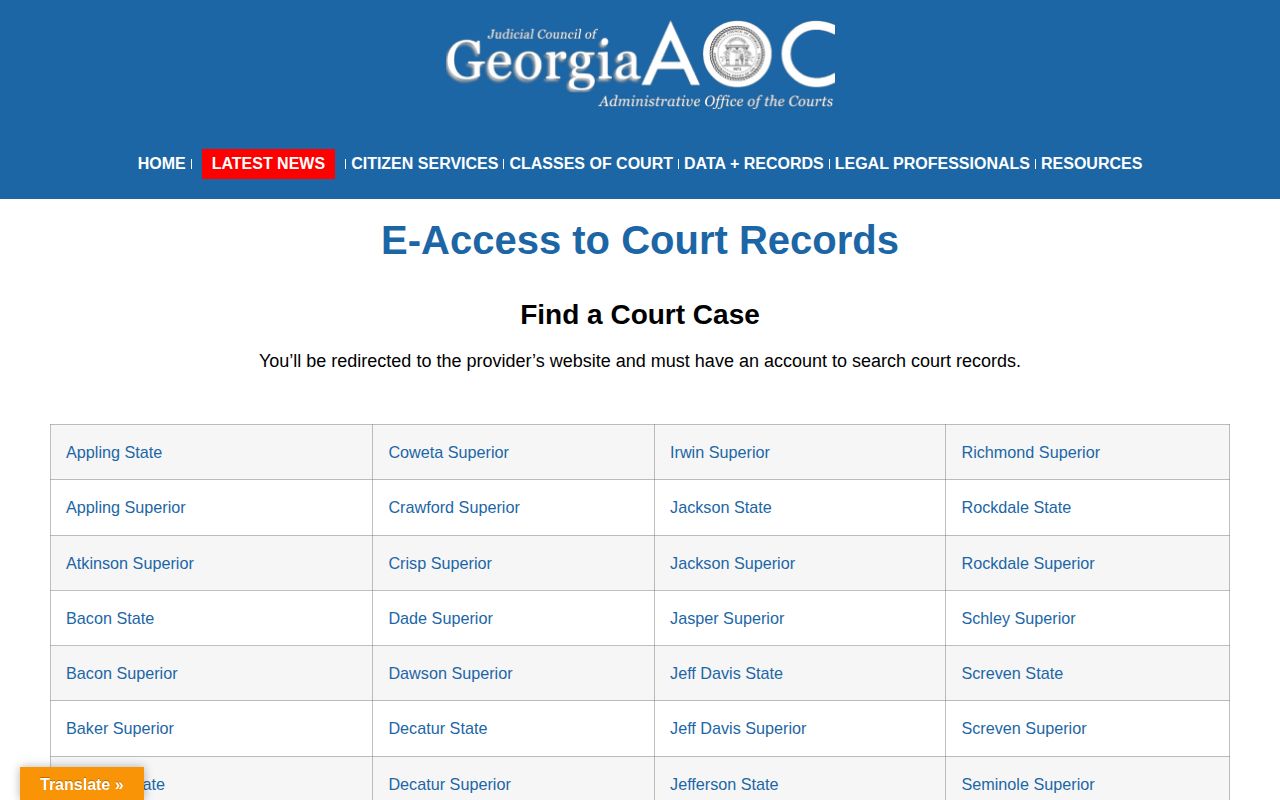
A dead-end search is not always a dead end. Check the county and court type again before concluding no case exists. A local clerk may rely on a provider that a statewide search never touches.
Busted Booking Feeds Across Georgia
Georgia's county systems share neither a design nor a refresh schedule. Some portals show current inmates, recent admits, released people, and a date range. Others offer a text roster with no documented photo. Some post a rolling arrest catalog or a daily dataset. A few have no stable public list at all. That gap is a source difference. It is not proof that any county keeps no records. Use the county link. That link reaches the sheriff or jail that made the booking.
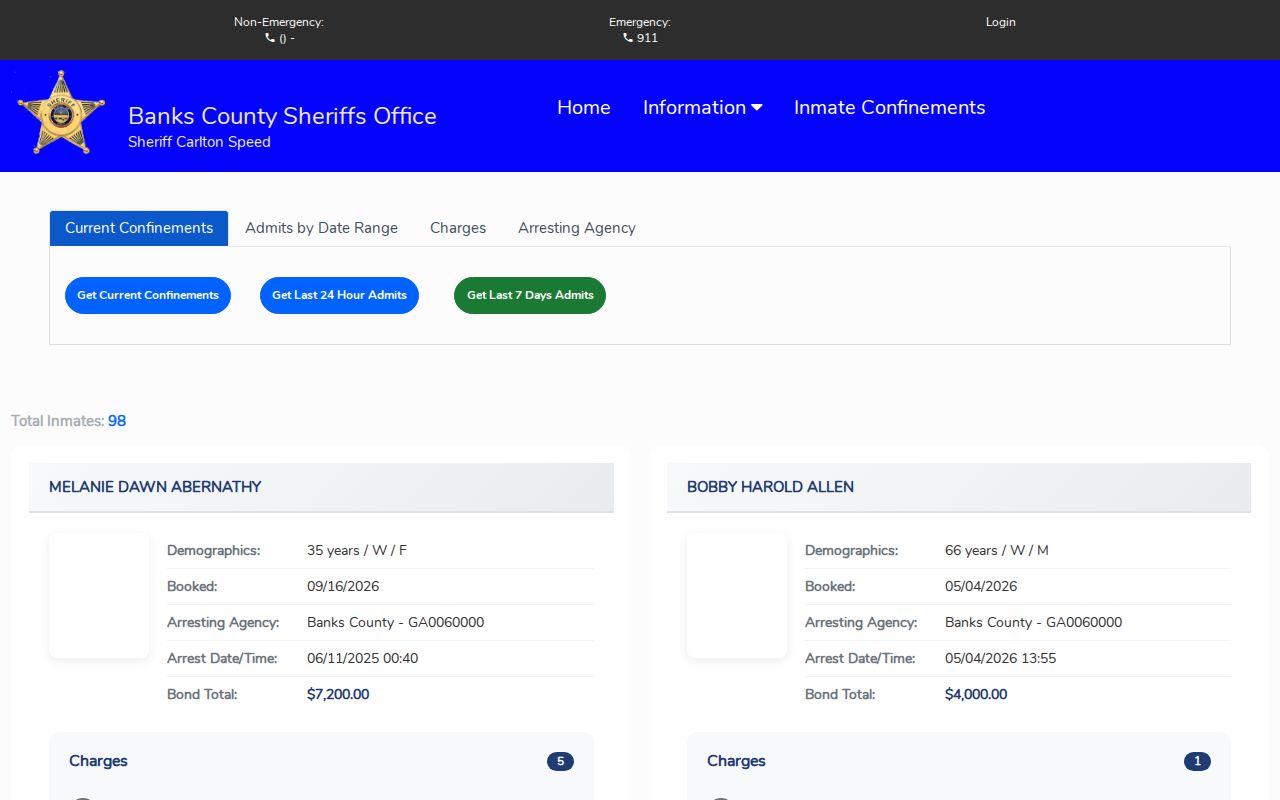
The photo-bearing Banks County jail search is one model. It covers current confinements and last-24-hour admits. Date queries, last-seven-day admits, and booking images are included too. It shows how a single county portal can work, not how every Georgia sheriff publishes.
County booking feeds across Georgia vary widely in what they display. Thomas and Tift run photo-bearing views. Current lists and released lists both exist there. Cobb, Bibb, Chatham, Gwinnett, and Fulton expose names, dates, charges, bonds, and status, but no public photo field appears. Columbia says its inmate list is gone. Hall's Police to Citizen portal posts a rolling population and arrest catalog, though consistent photos are absent. These setups come from each agency. No single statewide standard governs them.
Photo access tracks policy and vendor setup more than county size. Big urban systems may offer datasets, date filters, and release modes without any image. Small counties sometimes run photo portals. Georgia law limits some web publication and fee-site disclosure, yet local policy still shapes each roster. An official-linked portal can stay incomplete, delayed, or image-free.
Why might a roster show no photo? The county may not publish one. Its vendor may not display it. Or the image may simply be unavailable. Ask the records custodian whether a legally disclosable copy exists.
Most feeds cover a same-day or recent window only. Released names drop off a current-inmate list fast. A seven-day or 48-hour tab is a limited view, never an archive. When a county portal is down, start from the sheriff's official home page and ask its records custodian for the date range you need. Pick the matching county in the statewide directory to reach its official source.
The Georgia Criminal Justice Coordinating Council describes VINE as a statewide automated victim-notification service. It sends custody-status or release notices to victims. It is not a public photo feed, and it does not replace a jail or court record. Some county apps link to news, tips, or roster tools; an icon alone proves nothing about photos or alerts.
Note: Portal labels such as current, recent, and released describe separate windows, not a complete booking history.
GDC Offender Photos and Search
The Georgia Department of Corrections goes by GDC. Its Offender Query covers state-prison and sentence records, not every Georgia arrest. Search by GDC ID when you have one. Otherwise use the name fields. Broaden a narrow query that returns nothing; GDC's help page describes active, inactive, and all-offender filters and notes broad searches may be limited.
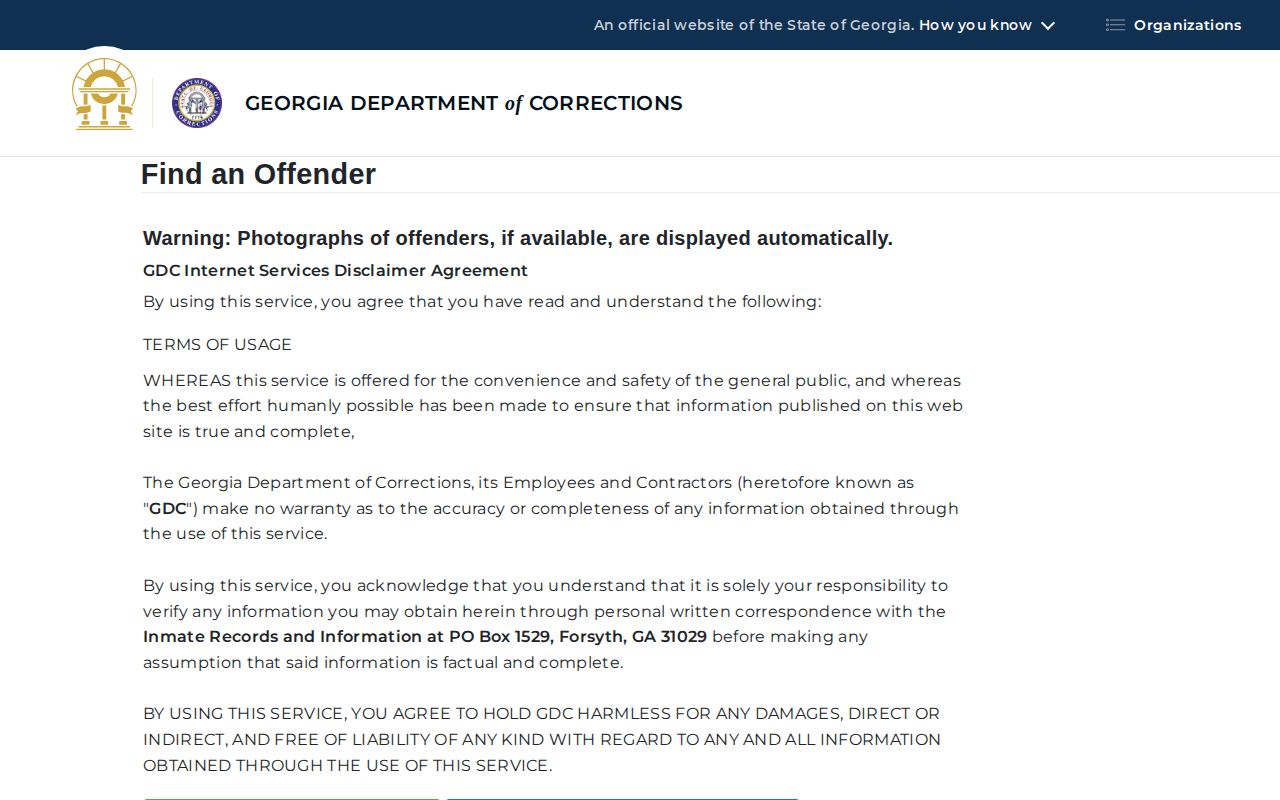
A GDC profile may include a photo. The image appears only if one is available and uploaded. Not every person has one. Profile edits generally appear within 24 hours of an internal update. That is no live movement tracker. Former or inactive profiles can remain visible. Some people still drop out, including certain ones who completed First Offender sentences. When an exact name fails, GDC's search help suggests the first four letters of a surname. Add the all-offenders option.
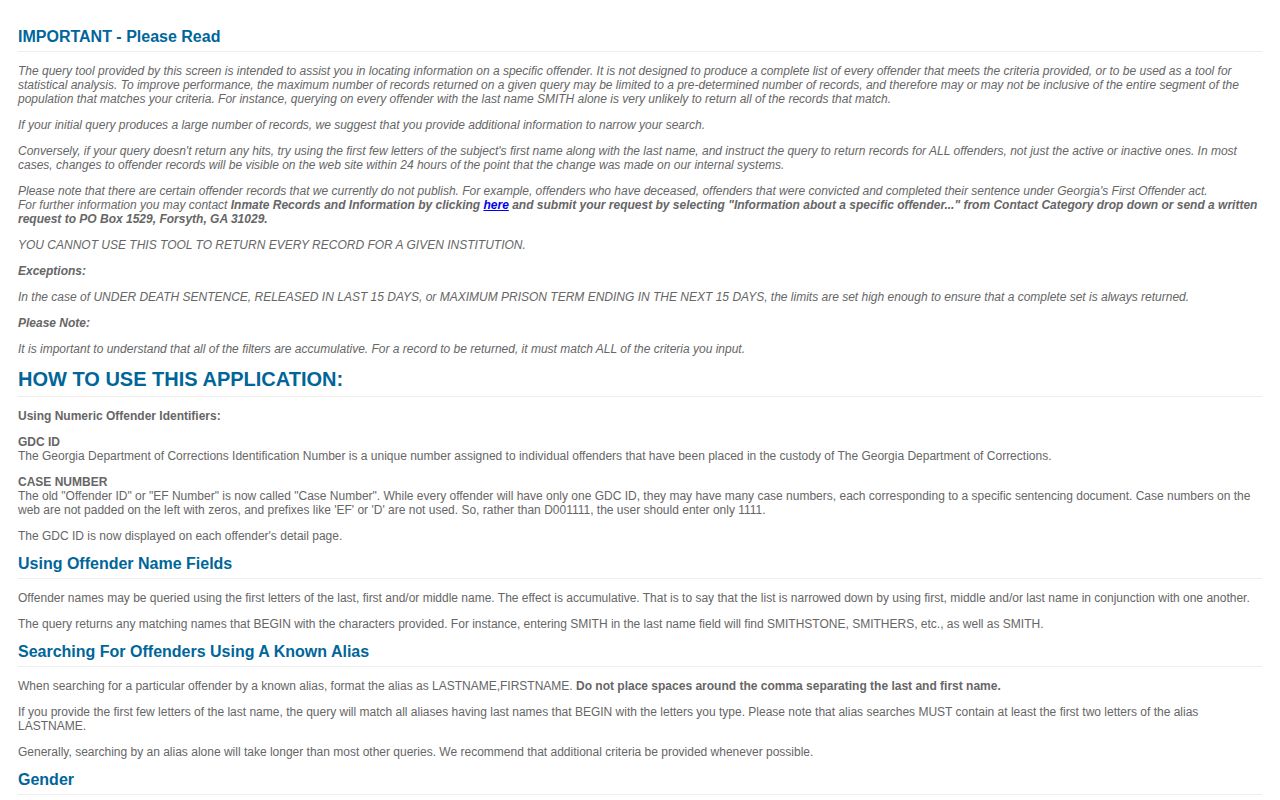
A missing GDC result proves little. It never shows a person skipped prison. Confirm the name, GDC ID, location, offense, sentence, and last-updated context before concluding anything. The records request path is separate from the search form, and transfer dates stay unpublished for security reasons.
Georgia Warrants and Wanted Lists
The Georgia Bureau of Investigation fugitive page covers selected task force work. Its cases and agency notices are selected, not a complete list of active Georgia warrants. FBI Atlanta posts selected federal notices. So do the U.S. Marshals' Northern, Middle, and Southern District pages. GDC issues dated escape or absconder releases. No confirmed live statewide index exists. Check each notice for its issuing agency and date.
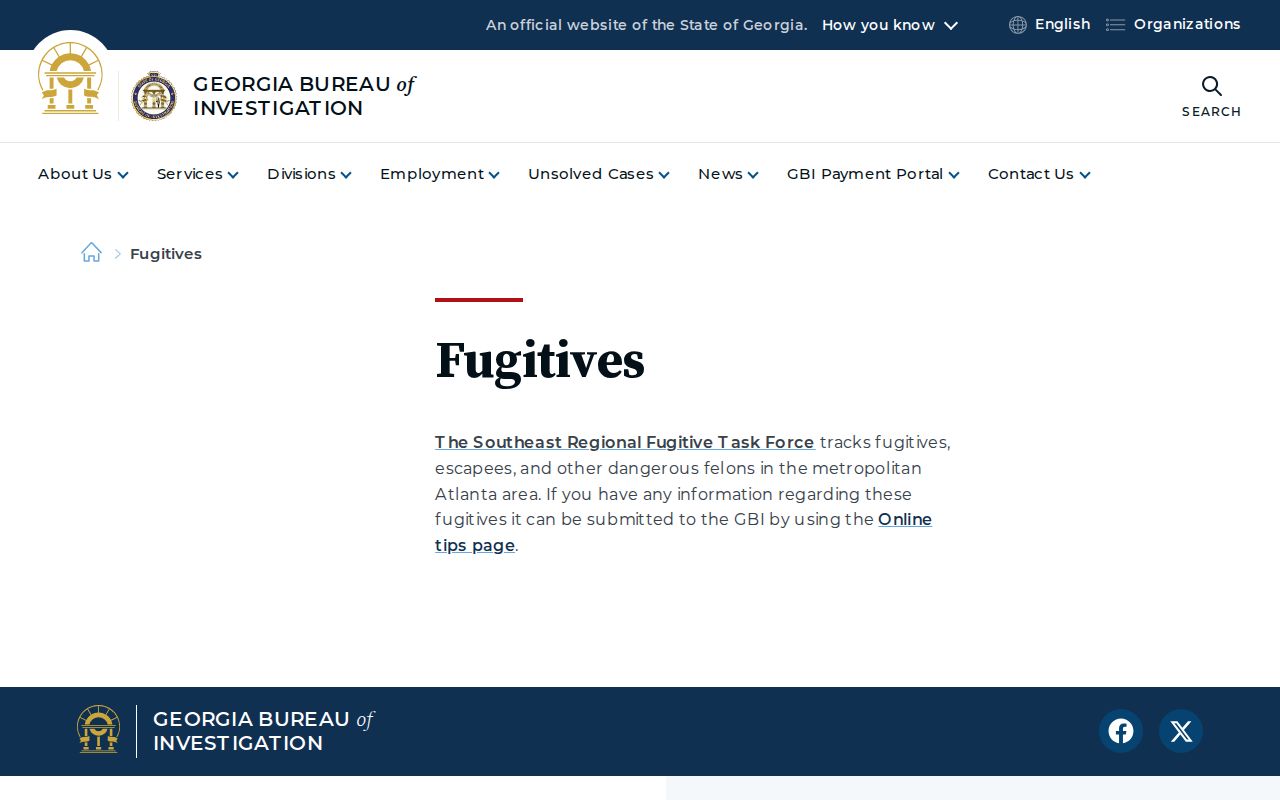
A curated wanted page cannot check every warrant. First, identify the county or court that may have issued the warrant. Use its official clerk or sheriff contact and ask how to verify status. A listing may be old or recalled. It may also tie to a changed case. If a notice may concern you, contact a lawyer or the issuing court about safe resolution. Never approach or detain another person. Call 911 for immediate danger. For non-emergencies, use an official tip line; the statewide fugitive list covers agency notices in more depth.
Where a Georgia Booking Photo Lives
One person can move through several systems. A fresh admit may surface on a county feed. A release can pull the name from a current roster while the booking record stays with the county. A state sentence then leads to a GDC profile, which is why the table keeps those stages apart.
| Stage | Best first source | What a result means |
|---|---|---|
| Just booked | Arresting agency or county jail feed | A recorded intake; the charge remains an charge. |
| Still in county custody | Current roster or jail records unit | Custody at the time checked, subject to portal delay. |
| Released from county jail | County booking record, release field, and court docket | The roster may no longer list the person; the record may remain obtainable. |
| Sentenced to state prison | GDC Offender Query | A state corrections profile if GDC publishes one. |
| Federal or ICE custody | BOP or ICE locator | A limited custody match, not a public mugshot result. |
A booking record tells one part of the story. It may leave out a release date. It may skip the court result too. An old search hit can make someone look locked up long after they walked out, so treat any roster entry as a moment-in-time fact about custody. Can a roster prove how a case ended? No. The jail list shows who was held, while the court docket shows what the court decided, and questions about a case call for both sources.
Note: Confirm present custody with the agency holding the person, and read the court docket for the outcome of the charge.
Georgia Busted Mugshot Indexes
Private booking indexes and news outlets come after official records in the source order. RecentlyBooked's Georgia index pulls recent bookings from county and jail sources, according to its own page descriptions. Its counts are index totals, though. They are not state booking statistics. A record there can lag behind a sheriff's update or miss it entirely, so use results as leads and cross-check with the sheriff, the court, or the state agency that holds the record.
Other commercial Georgia sections include Busted Newspaper, Mugshots.com, Arrests.org, and Mugshots.zone. These are secondary reproductions. A private publisher may keep a copy on display after the jail page changes. That is why a stale listing should worry you. When a publisher's policy is unclear or a page will not load, call the material unverified rather than guessing at what it means.
News coverage adds another layer. The Georgia Gazette, the Atlanta Journal-Constitution, WSB-TV, 11Alive, FOX 5 Atlanta, and Georgia Public Broadcasting all report on arrests. Their work is editorial, not a statewide booking feed. It can supply real context. For a case outcome, the court docket still governs.
Removal processes vary from publisher to publisher. Some offer a no-cost request for qualifying cases. Others allow discretionary correction or removal. Still others post no clear free Georgia process at all. Georgia's statutory route works only when its conditions fit. Never pay a third party that promises universal removal, and remember that a private correction never changes the government record itself. The Georgia mugshot law page walks through checking the statute and each publisher's policy without promising a result.
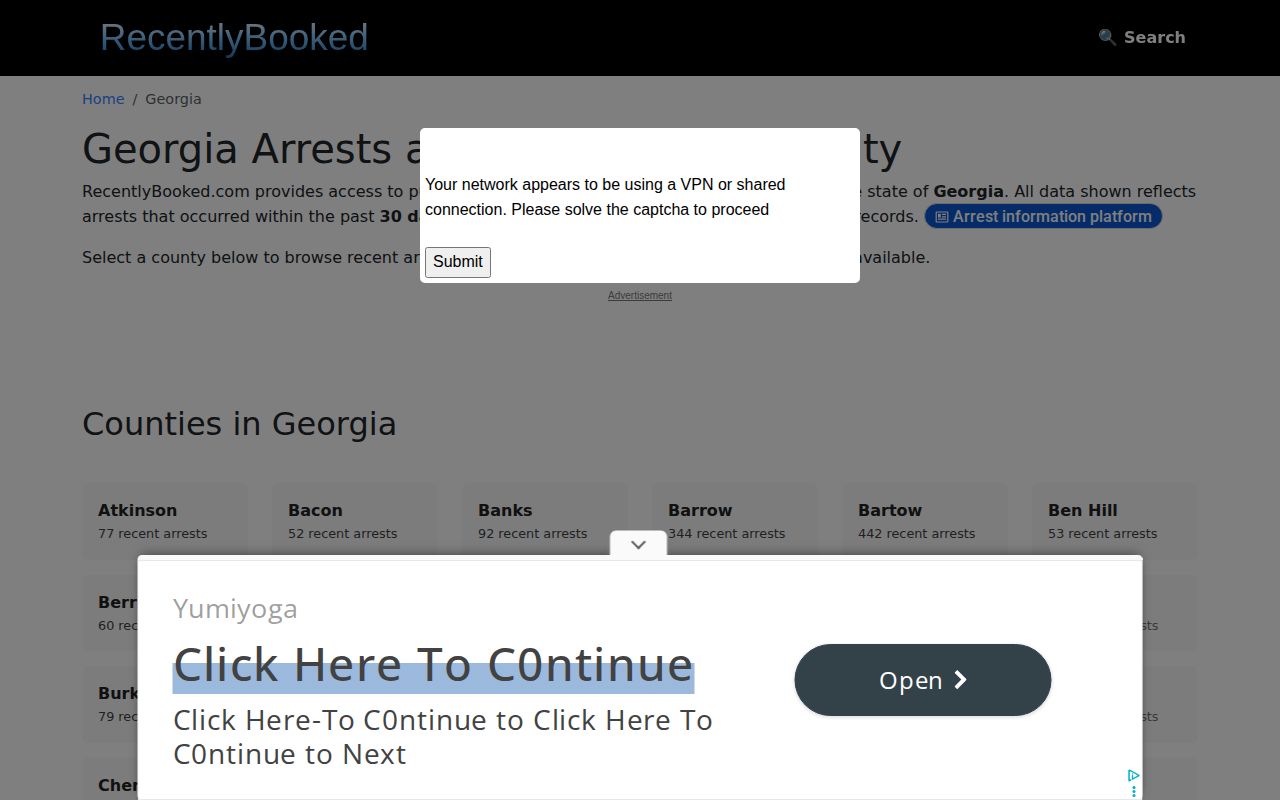
This image shows a private state index, not an official booking interface. Use it to spot a possible source. Then take any name or charge to the agency or court that holds the actual record.